The existing literature provides preclinical observations that can inform mechanistic questions. Study quality depends on the model and its controls, not the popularity of a compound. A result in a tendon cell preparation cannot establish clinical healing or long term safety. Reviews should retain the source population and endpoint beside every finding.
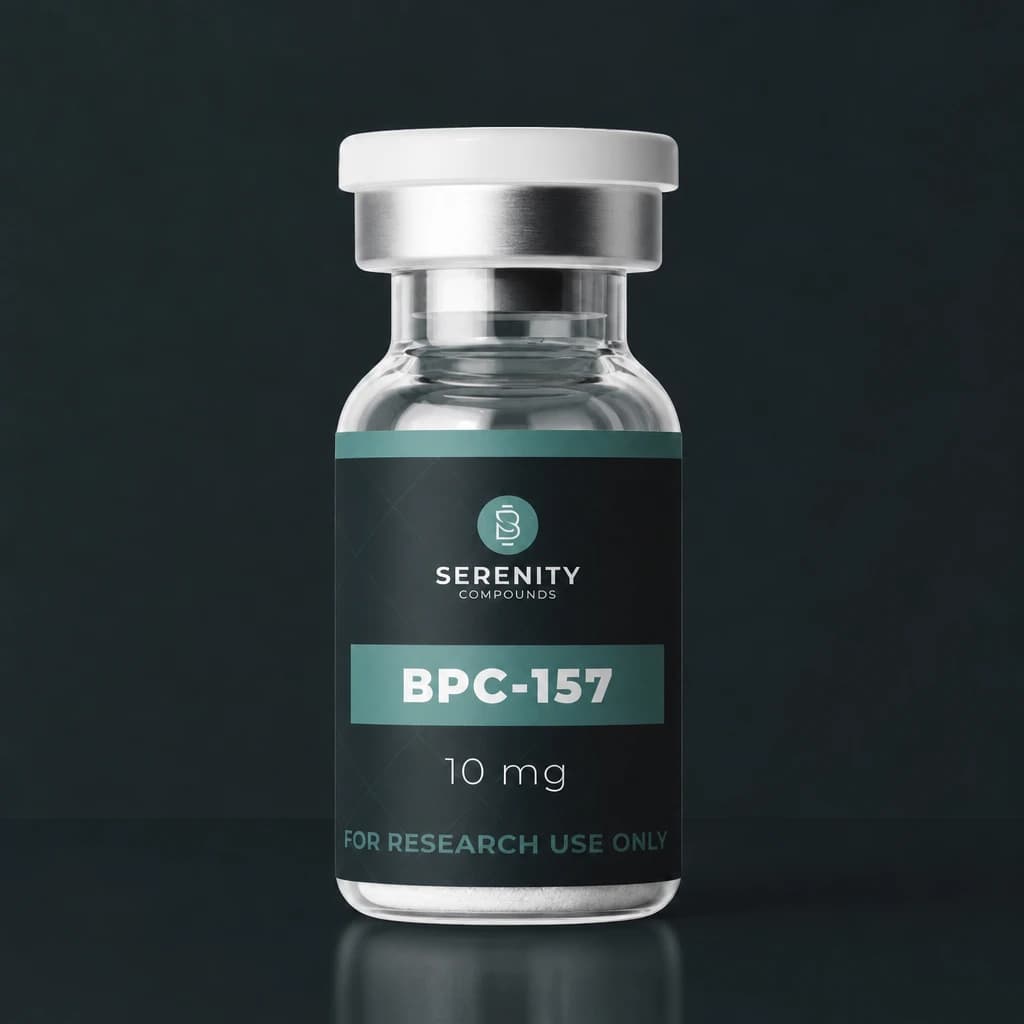
Representative product imagery. Verify the physical label and lot documentation on receipt.
Tissue Research
BPC-157
In stock·Ships in 1–2 business days
BPC-157 peptide in a 10 mg vial with batch-specific documentation. Each unit is labeled with a traceable lot code and links to its corresponding analytical report.
Select size2 options
Select pack sizeSave 18% on kits
1 × 10 mg$51.99
In stockSelected size 10 mgSC-BPC-010
Transparent volume pricing10-vial peptide kits save 18%.
Secure checkout US & EU dispatch
Research use only acknowledgment required at checkout
Published report · Lot 2025297
Reports describe the tested lot. Match the lot on your label before interpreting results.
Compound context
What researchers study
BPC-157 is a synthetic sequence of 15 amino acids studied in preclinical tissue models. This listing supplies research material for qualified laboratory work, with available quantities shown in the variant selector. The relevant purchase question is whether the documented sequence and analytical quality match the planned assay. A vial name alone doesn't answer that question.
Published tendon fibroblast work has examined receptor expression and responses associated with cell growth. Those measurements describe a controlled experimental system. They don't prove that BPC 157 peptide repairs injuries in humans. Proposed mechanisms also remain more complex than a single established receptor interaction, so broad healing claims exceed what a basic identity or purity report can show.
Tissue experiments need endpoints that distinguish migration from proliferation and loss of cells. A scratch that closes faster in culture may reflect more than one process. Exposure time and baseline cell density affect interpretation. Comparing a treated sample with an appropriate vehicle control helps isolate the question, but the conclusion still belongs to that model.
Scope limitMatch the lot to its identity and purity documentation before experimental use. Serenity materials are research use only. We don't provide injury treatment claims, personal dosage plans or instructions for injection.
Serenity Compounds is not a compounding pharmacy or chemical compounding facility as defined under Section 503A of the Federal Food, Drug, and Cosmetic Act.
Common laboratory focus
An identity assessment can combine expected mass with sequence related fragments and chromatographic behavior. Purity measurements answer a separate question and depend on the detector used. A reported peak area percentage isn't automatically the mass fraction of peptide in a vial. Check whether water, counterions or other components are included in the stated content.
Independent repeats help show whether the observed change survives a new preparation and a new run. A viability readout can reveal damage that would otherwise distort a migration or signaling endpoint. For work involving a blend, an individual component control is necessary to investigate contribution. The combined vial doesn't inherit proven effects from the separate ingredients.
Quality documentation
Know what your laboratory receives.
Batch records are published for transparency and should be independently reviewed by qualified research personnel.
Current certificateBPC-157 · Lot 2025297Liquilabs s.r.o.View report
- Tamper-evident packaging
- Lot and SKU traceability
- Independent analytical review
Continue exploring