The amylin pathway is distinct from GLP-1 receptor signaling. That difference is one reason researchers investigate complementary mechanisms. A cagrilintide peptide reference should be selected by its documented identity, not by grouping every metabolic compound under the same receptor label. A name shared by a study and a catalog doesn't establish pharmaceutical equivalence.
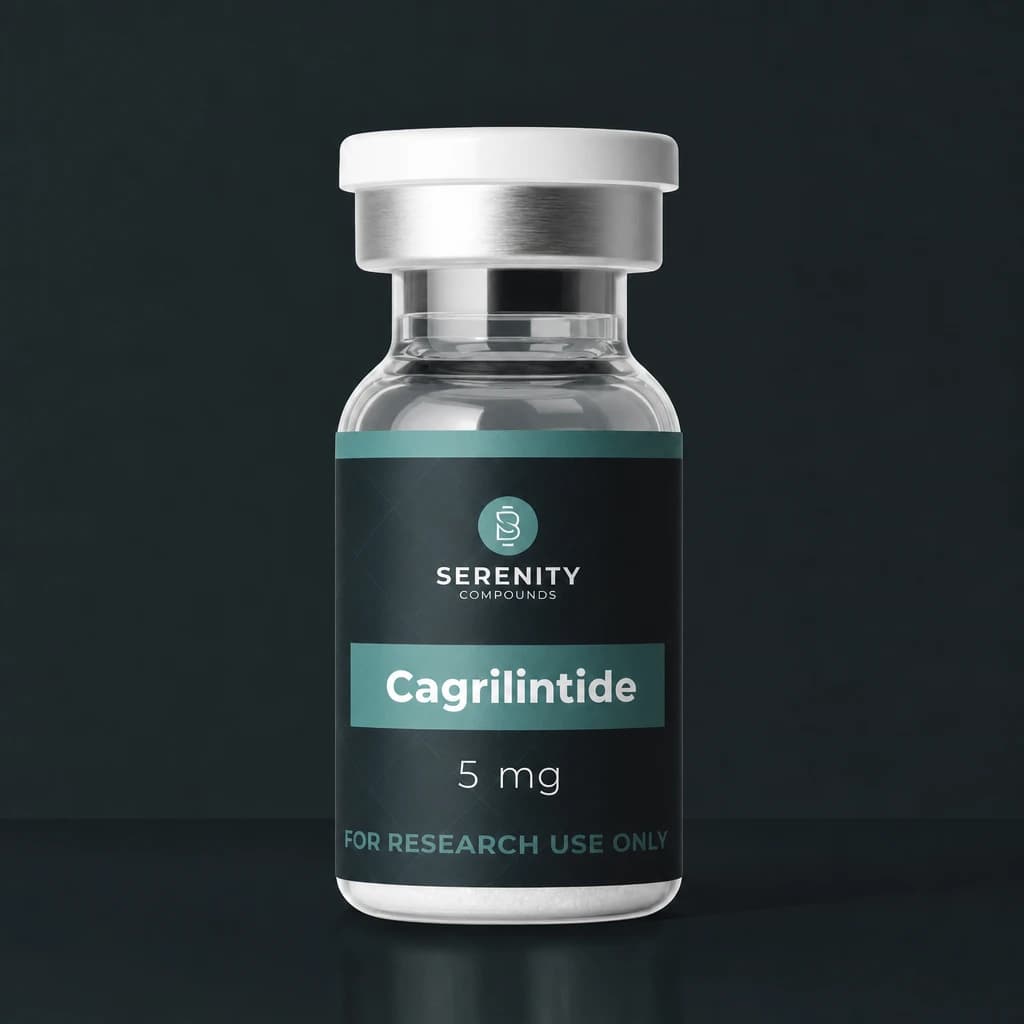
Representative product imagery. Verify the physical label and lot documentation on receipt.
Metabolic Research
Cagrilintide
In stock·Ships in 1–2 business days
Cagrilintide research material supplied with batch-level documentation. Each unit is labeled with a traceable lot code and links to its corresponding analytical report.
Select size3 options
Select pack sizeSave 18% on kits
1 × 5 mg$60.99
In stockSelected size 5 mgSC-CGL5-005
Transparent volume pricing10-vial peptide kits save 18%.
Secure checkout US & EU dispatch
Research use only acknowledgment required at checkout
Report not published
Compound context
What researchers study
Cagrilintide is an amylin analog investigated in metabolic research. Its mechanism differs from the incretin pathways associated with GLP-1 drugs. The research material on this page is intended for laboratory characterization and defined experiments. Select a quantity using the listed variants and confirm the identity needed by your method before interpreting a biological response.
Clinical publications have investigated cagrilintide both alone and alongside semaglutide. A controlled combination trial answers questions about the specific study products and population. It doesn't validate mixing arbitrary research materials or transferring a clinical schedule into a laboratory protocol. The partner compound and formulation are part of the evidence, not incidental details.
Amylin receptor assays depend on the receptor components present in the test system. Receptor expression can influence apparent potency and complicate comparison between laboratories. A functional signal should be considered alongside appropriate controls and a stated readout. A single potency value without the assay conditions cannot describe every aspect of a compound's behavior.
Scope limitRetain the lot identity and analytical method with your experimental record. Research vials are not approved medicines or combination treatment kits. Cagrilintide dosage discussions in clinical literature aren't instructions for personal use.
Serenity Compounds is not a compounding pharmacy or chemical compounding facility as defined under Section 503A of the Federal Food, Drug, and Cosmetic Act.
Common laboratory focus
REDEFINE studies provide information about named trial arms and defined populations. Results from participants with diabetes and those without it cannot be compared as if baseline conditions were identical. When reviewing a combination, distinguish each constituent arm from the combined arm. An observed group average doesn't predict an outcome for a particular individual.
Document the receptor construct and the signaling endpoint so another analyst can interpret the result. Include the reference ligand and vehicle comparison. If a detector responds to the material independently of receptor activity, an apparent response can be misleading. An independent assay can help test whether the signal reflects the biological question being asked.
Quality documentation
Know what your laboratory receives.
Batch records are published for transparency and should be independently reviewed by qualified research personnel.
Current certificateCagrilintide · Report not publishedSee original reportView report
- Tamper-evident packaging
- Lot and SKU traceability
- Independent analytical review
Continue exploring