Yes. The two names refer to this listing, but retatrutide is the more precise molecule name for literature searches and laboratory records. Other GLP3 spellings do not establish a new substance. Keep the lot identifier and chemical documentation with the catalog name so the intended reference can be traced through receipt and analysis.
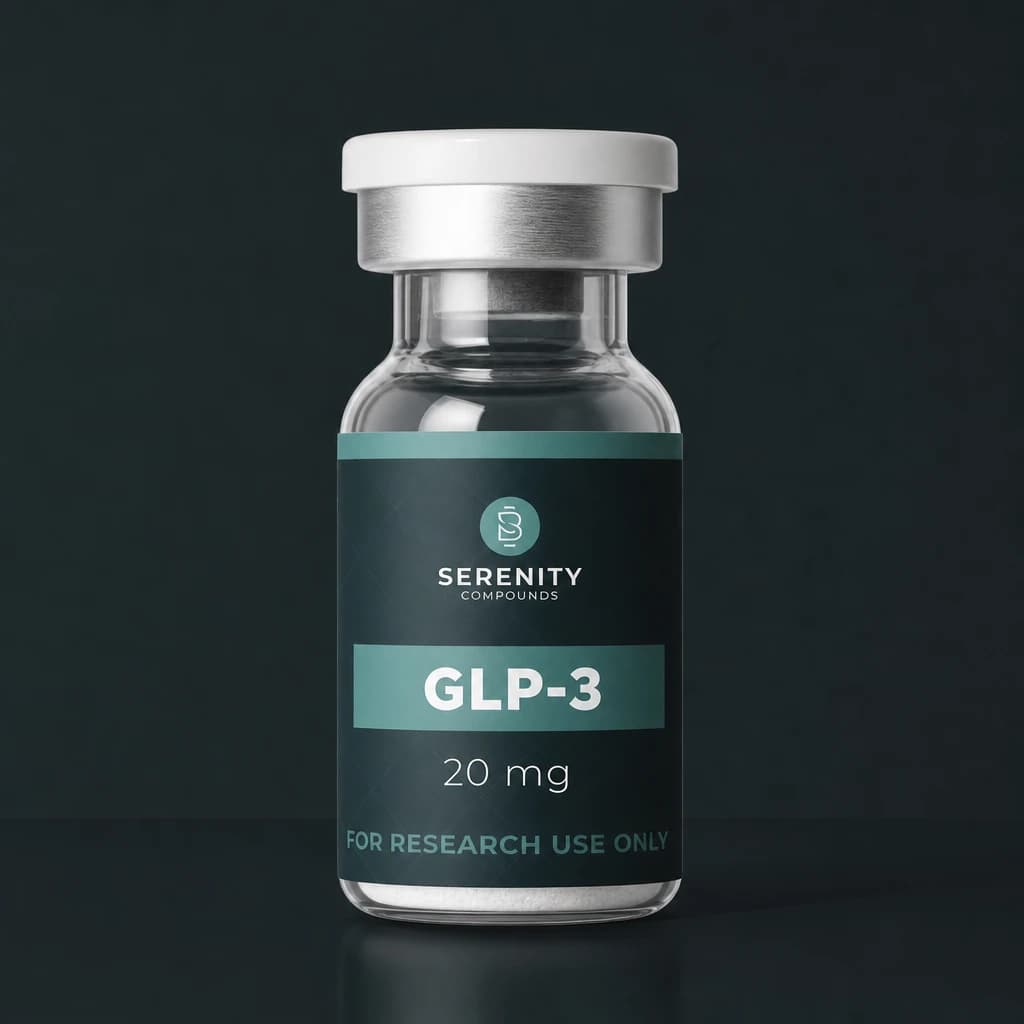
Representative product imagery. Verify the physical label and lot documentation on receipt.
Metabolic Research
GLP-3
In stock·Ships in 1–2 business days
Researchers seeking Retatrutide can view this GLP-3 research offering for current availability and lot documentation.
GLP-3 peptide offered in 10 mg and 20 mg sizes with batch-level documentation. Each unit is labeled with a traceable lot code and links to its corresponding analytical report.
Select size5 options
Select pack sizeSave 18% on kits
1 × 20 mg$103.99
In stockSelected size 20 mgSC-GLP3-020
Transparent volume pricing10-vial peptide kits save 18%.
Secure checkout US & EU dispatch
Research use only acknowledgment required at checkout
Published report · Lot 2025296
Reports describe the tested lot. Match the lot on your label before interpreting results.
Compound context
What researchers study
GLP-3 is Serenity's catalog name for retatrutide research material. The molecule is a peptide studied for activity at GIP, GLP-1 and glucagon receptors. The nickname is not a separate established hormone designation. Laboratories should record the molecule name alongside the GLP-3 label and confirm the analytical identity of the selected lot.
A randomized phase 2 obesity trial and related metabolic publications describe the investigated clinical material and study populations. Those findings provide scientific context, not a claim that this research vial produces the same outcomes. Retatrutide for sale in a laboratory catalog must not be confused with an approved medicine or access to a clinical trial.
Three receptor pathways require more than one unqualified potency number. An assay can emphasize one response while another system yields a different profile. Receptor expression and the measurement interval matter. A useful analytical comparison states which pathway is being measured and uses reference conditions that distinguish the compound's response from the background matrix.
Scope limitReview the retatrutide identity and batch report before laboratory use. This product is research use only. Serenity does not provide human administration instructions, personal dosing charts or guarantees based on clinical trial weight changes.
Serenity Compounds is not a compounding pharmacy or chemical compounding facility as defined under Section 503A of the Federal Food, Drug, and Cosmetic Act.
Common laboratory focus
Separate receptor assays can compare responses at GIP, GLP-1 and glucagon receptors under specified conditions. Those measurements are not interchangeable with body weight endpoints from clinical studies. The selected readout and reference ligand help define the result. Triple agonism describes target activity rather than a promise that every effect is stronger.
Clinical findings belong to the formulation and population that were actually investigated. A matching ingredient name or a high purity result does not establish pharmaceutical equivalence. The batch report can support particular analytical statements, but it cannot prove a therapeutic outcome. Questions about approval should be checked against current regulator records rather than catalog availability.
Quality documentation
Know what your laboratory receives.
Batch records are published for transparency and should be independently reviewed by qualified research personnel.
Current certificateGLP-3 · Lot 2025296Liquilabs s.r.o.View report
- Tamper-evident packaging
- Lot and SKU traceability
- Independent analytical review
Continue exploring