The analog's sequence changes are relevant to its behavior, so it should not be substituted into a native IGF-1 method without assessing the difference. Expected mass and appropriate identity testing help distinguish the materials. IGF 1 LR3 searches often omit this distinction, but a laboratory record should retain the full analog designation.
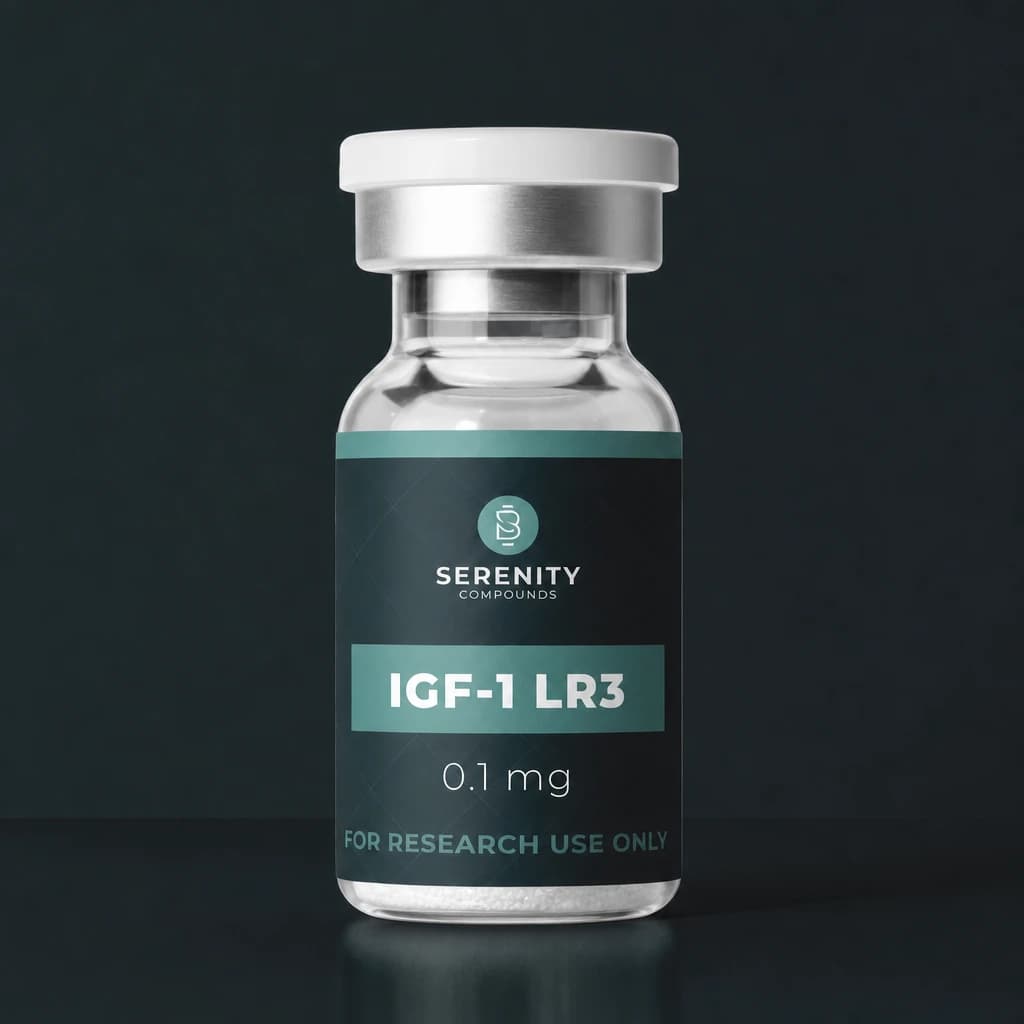
Representative product imagery. Verify the physical label and lot documentation on receipt.
Growth Signaling
IGF-1 LR3
In stock·Ships in 1–2 business days
IGF-1 LR3 research material supplied with batch-level documentation. Each unit is labeled with a traceable lot code and links to its corresponding analytical report.
Select size2 options
Select pack sizeSave 18% on kits
1 × 0.1 mg$33.99
In stockSelected size 0.1 mgSC-IG01-0P1
Transparent volume pricing10-vial peptide kits save 18%.
Secure checkout US & EU dispatch
Research use only acknowledgment required at checkout
Report not published
Compound context
What researchers study
IGF-1 LR3 is an analog of insulin like growth factor I used in laboratory signaling research. Its modifications distinguish it from native IGF-1 and affect interactions with binding proteins. Select a reference by its documented sequence and form. Available quantities on this page describe research material rather than a product for personal muscle growth use.
Published cell experiments show why IGF binding proteins matter when comparing the analog with native material. Animal studies have also reported outcomes that differ across species and endpoints. Increased signaling in one setting does not establish increased muscle growth in another. An IGF-1 LR3 peptide result must be interpreted with the model that produced it.
Serum or binding proteins in the assay matrix can change the relationship between total analyte and receptor exposure. A difference in cell proliferation may therefore depend on the culture conditions. Record the matrix and reference ligand when comparing response curves. A nominal concentration without those details can conceal the reason two experiments disagree.
Scope limitConfirm LR3 identity and the calculation basis against the batch record. Research materials are not supplied for bodybuilding, personal dosing or administration. A purity report cannot establish a clinical benefit or a human safety profile.
Serenity Compounds is not a compounding pharmacy or chemical compounding facility as defined under Section 503A of the Federal Food, Drug, and Cosmetic Act.
Common laboratory focus
Binding proteins can alter the amount of ligand available to interact with a receptor. Their effect depends on the system and can complicate a simple potency ranking. Matched culture conditions make the comparison easier to interpret. If the matrix differs between samples, the observed result may not isolate the compound difference the experiment intended to test.
A change in cell number answers a question about that population under the tested conditions. It doesn't establish whole body growth or beneficial tissue development. Viability and differentiation measurements can provide context for the observed change. The endpoint should be described precisely enough that a reader doesn't confuse more cells with an established clinical outcome.
Quality documentation
Know what your laboratory receives.
Batch records are published for transparency and should be independently reviewed by qualified research personnel.
Current certificateIGF-1 LR3 · Report not publishedSee original reportView report
- Tamper-evident packaging
- Lot and SKU traceability
- Independent analytical review
Continue exploring