Biologically, GLP-1 is a hormone name and a broader term used in discussions of receptor agonists. This listing uses it as a catalog label for semaglutide. A laboratory record should retain the specific molecule so it cannot be confused with native GLP-1 or another agonist. The product label and analytical report should agree.
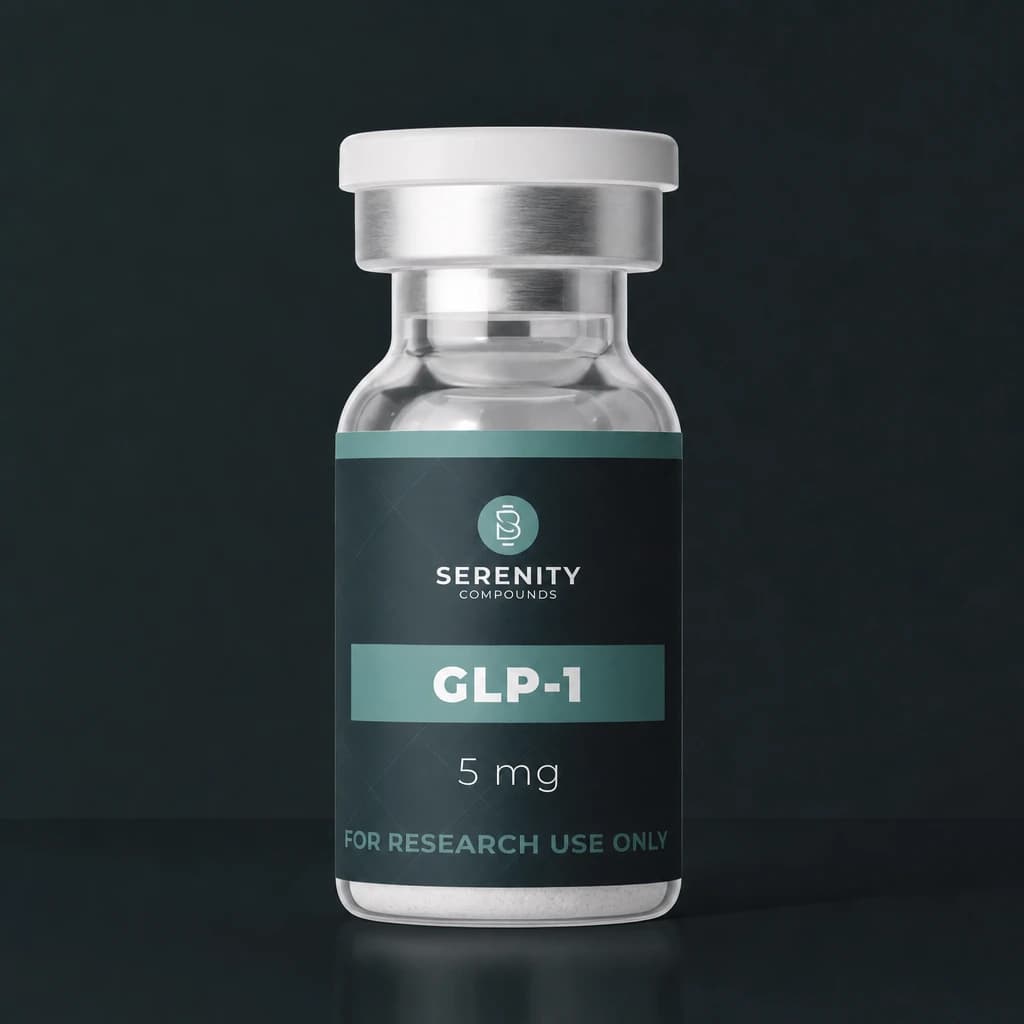
Representative product imagery. Verify the physical label and lot documentation on receipt.
Metabolic Research
GLP-1
In stock·Ships in 1–2 business days
GLP-1 (Semaglutide) research material supplied with batch-level documentation. Each unit is labeled with a traceable lot code and links to its corresponding analytical report.
Select size4 options
Select pack sizeSave 18% on kits
1 × 5 mg$27.99
In stockSelected size 5 mgSC-GLP1-005
Transparent volume pricing10-vial peptide kits save 18%.
Secure checkout US & EU dispatch
Research use only acknowledgment required at checkout
Report not published
Compound context
What researchers study
GLP-1 is the catalog label used here for semaglutide research material. Semaglutide is a modified peptide associated with GLP-1 receptor agonism. The broad GLP-1 family name alone isn't a complete chemical identity, so confirm the lot documentation before selecting a reference. Available quantities are listed for laboratory research rather than clinical administration.
Published discovery work describes changes intended to alter the peptide's biological persistence. Approved semaglutide medicines involve specific formulations and manufacturing controls beyond an active ingredient name. A semaglutide peptide for sale as a research reference is not a substitute for those products. Clinical efficacy findings belong to the investigated medicine and study population.
Receptor activation can be assessed through a defined signaling readout, but the apparent response depends on the model and matrix. Protein binding and the free fraction can complicate nominal concentration comparisons. Use the documented chemical form when selecting molecular weight for calculations. Salts or other forms should not silently be treated as analytically identical.
Scope limitRetain the exact material identity and batch report with the assay record. Serenity does not supply prescription treatment or instructions for human use. Pharmaceutical labels elsewhere do not establish the properties of this research vial.
Serenity Compounds is not a compounding pharmacy or chemical compounding facility as defined under Section 503A of the Federal Food, Drug, and Cosmetic Act.
Common laboratory focus
An approved formulation is evaluated as a complete drug product for specified uses. Matching an ingredient name does not reproduce that evaluation, dosage form or quality system. Research peptides semaglutide searches can blur those categories. A research reference must remain within its stated laboratory scope regardless of the popularity of associated medicines.
Matched receptor systems and reference ligands help interpret a signaling difference. Background measurements show whether the matrix affects the detector. The response interval should also be consistent across samples. A potency comparison in one assay cannot establish clinical interchangeability or tell a person how much material to administer.
Quality documentation
Know what your laboratory receives.
Batch records are published for transparency and should be independently reviewed by qualified research personnel.
Current certificateGLP-1 · Report not publishedSee original reportView report
- Tamper-evident packaging
- Lot and SKU traceability
- Independent analytical review
Continue exploring