Bacteriostatic water includes a preservative, while a preservative free water preparation does not. The relevant label must confirm the actual formulation. A preservative can affect a biological assay even when the analyte dissolves readily. Compare the full matrix requirements rather than selecting a diluent by a familiar abbreviation alone.
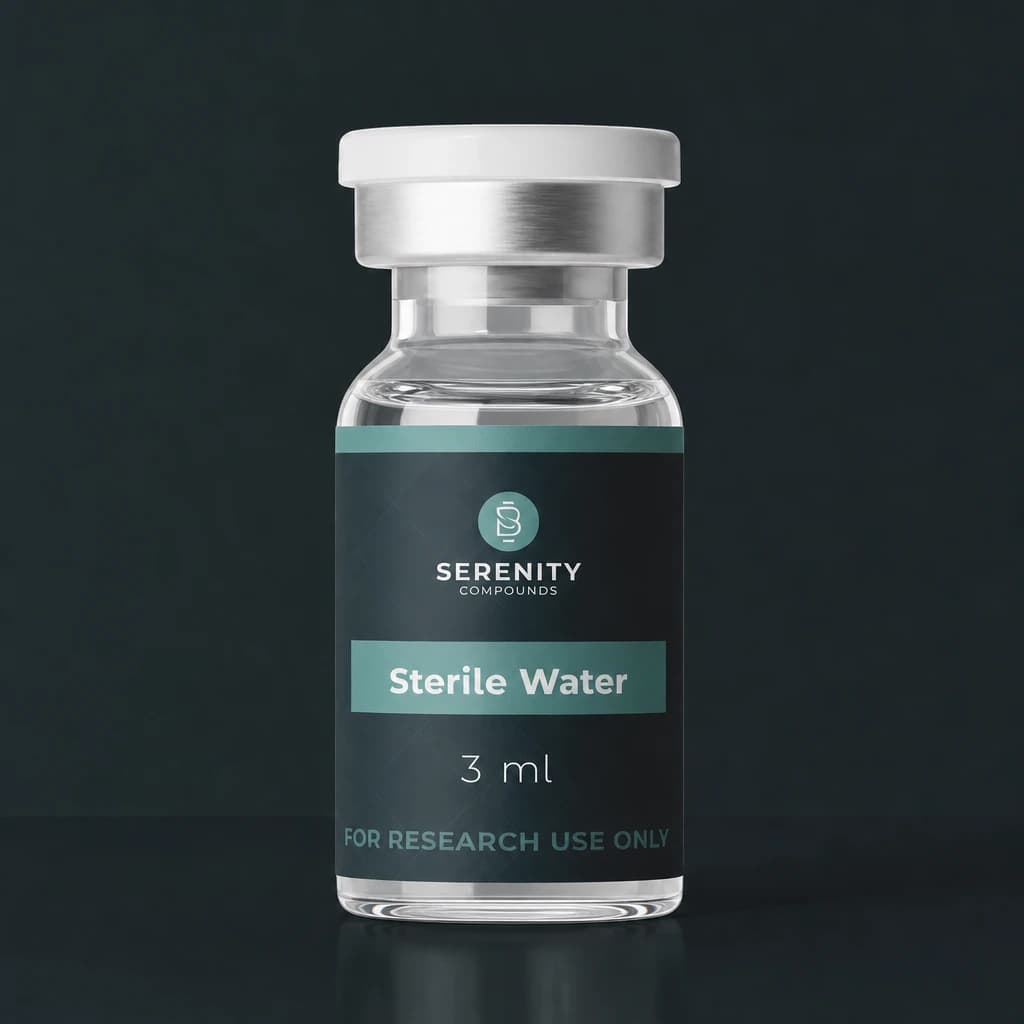
Representative product imagery. Verify the physical label and lot documentation on receipt.
Laboratory Methods
Sterile Water
In stock·Ships in 1–2 business days
Sterile Water research material supplied with batch-level documentation. Each unit is labeled with a traceable lot code and links to its corresponding analytical report.
Select size2 options
Select pack sizeSave 18% on kits
1 × 3 ml$5.98
In stockSelected size 3 mlSC-STW-003
Transparent volume pricing10-vial peptide kits save 18%.
Secure checkout US & EU dispatch
Research use only acknowledgment required at checkout
Report not published
Compound context
What researchers study
Sterile Water is a laboratory supply listing for methods that require a documented water preparation. Sterile water for injection is also a pharmaceutical label category, but that phrase does not certify every research vial as a medicine or USP product. Check the received label and current documentation for the specific preparation offered here.
A preservative free preparation differs from bacteriostatic water that contains an antimicrobial additive. The absence or presence of that additive can change the background of an assay. Neither water type is a universal solvent for every compound. Solubility and compatibility must be considered separately from claims about microorganisms at the point of testing.
Clear appearance does not prove that the intended analyte remains intact. A method may need to investigate degradation or adsorption after preparation. The final matrix must also suit the detector or cell system used. A diluent should therefore be selected through the laboratory method and product documentation rather than a generic reconstitution chart.
Scope limitMatch the volume and formulation details to the current label. These research supplies are not instructions for human or veterinary administration. An unrelated pharmaceutical label cannot establish the testing scope or expiry of this vial.
Serenity Compounds is not a compounding pharmacy or chemical compounding facility as defined under Section 503A of the Federal Food, Drug, and Cosmetic Act.
Common laboratory focus
Dissolved material can still degrade or interact with a container. An intact analyte method provides evidence that appearance cannot. A suitable vehicle control can also reveal effects from the preparation itself. Compatibility conclusions should state the compound and conditions tested instead of implying that one water type works for all peptides.
Retain the diluent lot alongside the analyte lot and the preparation date. Record the final solution volume used for calculations and any relevant exposure history. That connection makes later discrepancies easier to investigate. Storage limits need evidence for the actual preparation, not a date copied from another product or a forum discussion.
Quality documentation
Know what your laboratory receives.
Batch records are published for transparency and should be independently reviewed by qualified research personnel.
Current certificateSterile Water · Report not publishedSee original reportView report
- Tamper-evident packaging
- Lot and SKU traceability
- Independent analytical review
Continue exploring