The nickname is not used consistently enough to settle that question on its own. A laboratory should match the supplied sequence to the material in the intended method. Fragment and full length references can have different expected masses and properties. Preserve that distinction when reading a paper or comparing analytical certificates.
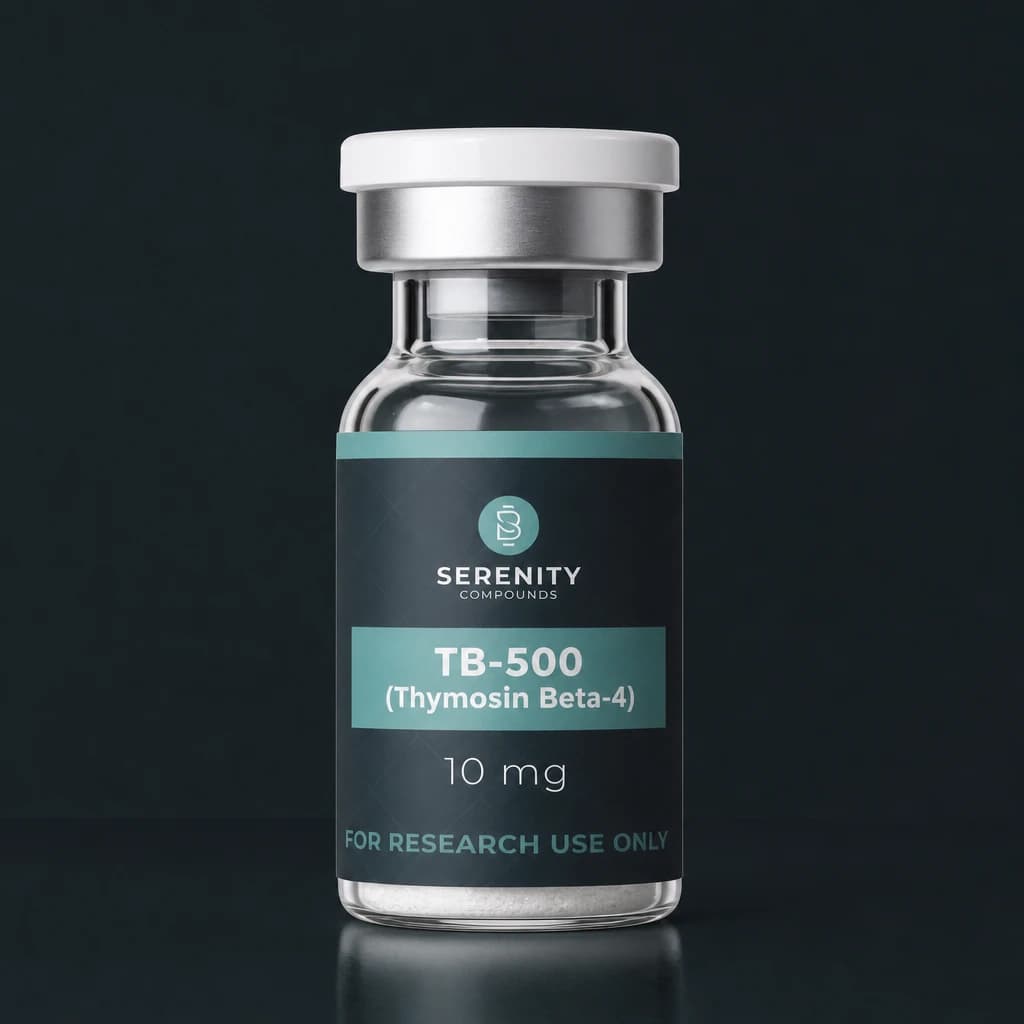
Representative product imagery. Verify the physical label and lot documentation on receipt.
Tissue Research
TB-500 (Thymosin Beta-4)
In stock·Ships in 1–2 business days
TB-500 (Thymosin Beta-4) research material supplied with batch-level documentation. Each unit is labeled with a traceable lot code and links to its corresponding analytical report.
Select size1 option
Select pack sizeSave 18% on kits
1 × 10 mg$88.99
In stockSelected size 10 mgSC-BT5-010
Transparent volume pricing10-vial peptide kits save 18%.
Secure checkout US & EU dispatch
Research use only acknowledgment required at checkout
Published report · Lot 2025289
Reports describe the tested lot. Match the lot on your label before interpreting results.
Compound context
What researchers study
TB-500 is a research catalog name associated with thymosin beta-4. Usage varies across suppliers and publications, so the actual sequence must be confirmed before a laboratory comparison. This listing provides available research quantities. A reference described as full length thymosin beta-4 is not automatically interchangeable with a shorter fragment carrying a similar name.
Thymosin beta-4 appears in published actin regulation and wound model research. Those studies address specific molecular identities and experimental endpoints. A TB 500 peptide label cannot by itself establish that the same material was supplied. Evidence about a tissue model also cannot establish injury treatment or a recovery outcome for a person.
Actin associated measurements can inform questions about cell structure and movement, but several processes can affect a tissue model endpoint. Cell viability and proliferation can complicate an apparent migration response. The experiment needs controls that distinguish those possibilities. A compound name should never substitute for a definition of what the method actually measures.
Scope limitUse sequence and mass information to resolve the TB-500 identity before experimental use. Research materials are not injury treatments or human dosing products. Ask for clarification if a report and a paper describe different sequence lengths.
Serenity Compounds is not a compounding pharmacy or chemical compounding facility as defined under Section 503A of the Federal Food, Drug, and Cosmetic Act.
Common laboratory focus
Measurements of actin polymerization and cell movement are related but distinct experimental observations. A result at the molecular level does not automatically establish a tissue outcome. The model and readout need to be stated together. Appropriate reference conditions help determine whether the observed change answers the intended mechanistic question.
Combining the material with another peptide introduces a new condition rather than a proven clinical stack. Separate constituent controls can help identify contribution to an endpoint. The blend ratio must be documented because total mass conceals individual exposure. A larger combined signal does not establish synergy without a defined comparison model.
Quality documentation
Know what your laboratory receives.
Batch records are published for transparency and should be independently reviewed by qualified research personnel.
Current certificateTB-500 (Thymosin Beta-4) · Lot 2025289Liquilabs s.r.o.View report
- Tamper-evident packaging
- Lot and SKU traceability
- Independent analytical review
Continue exploring