Is retatrutide FDA approved? As checked on September 5, 2026, FDA states that it is not a component of an approved drug. That status is separate from clinical trial progress and availability in a research catalog. A study result or supplier listing cannot establish authorization as a medicine.
Which source supports this status statement?
FDA's information on unapproved GLP-1 products explicitly addresses the compound. The retrieval date matters because regulatory status can change. Readers evaluating a later claim should check the current regulator record rather than relying on an old search snippet.
Sponsor announcements can provide useful development information, but they are not themselves approval decisions. A statement that a trial met an endpoint answers a different question from whether a regulator has authorized a defined product for a stated indication.
What is the difference between a trial phase and approval?
Clinical trial phases describe stages and purposes in development. A later stage does not guarantee approval or establish a launch date. The eventual decision depends on the submitted evidence and regulatory review, not merely on how advanced a program sounds in a headline.
The published phase 2 study provides evidence about its own participants and preparation. Our compound overview explains the mechanism and endpoints. Neither the paper nor that summary characterizes a research supplier's material.
Does a trial registry listing guarantee access?
No. Registry entries describe studies and their listed status. Eligibility and actual recruitment depend on the study site and protocol. An online listing should not be treated as a guarantee that a particular person can enroll or obtain the investigational product.
Why doesn't a research catalog change the answer?
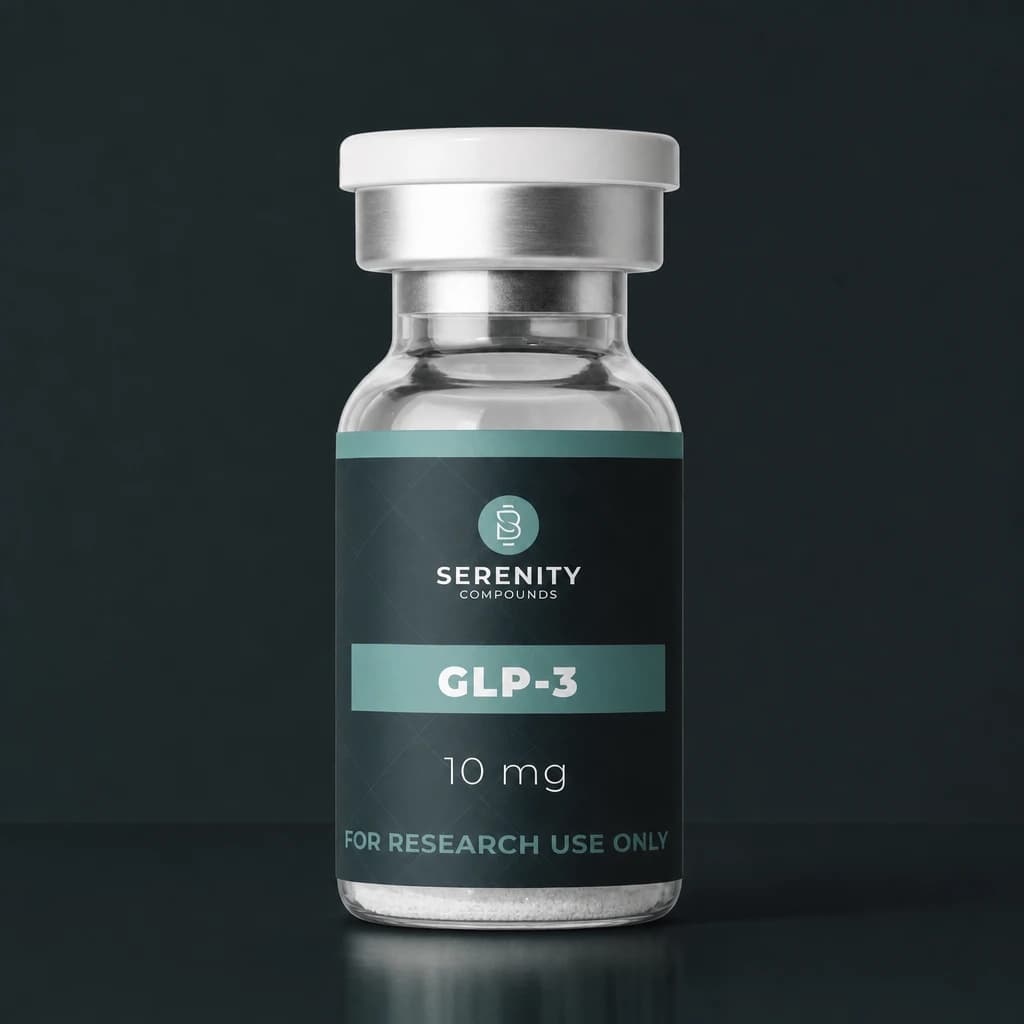
Serenity's GLP-3 listing uses the retatrutide identity mapping for a research reference. Catalog availability describes that offering, not an approved medicine. The site's research scope does not create a personal treatment pathway.
An analytical certificate also cannot establish regulatory approval. It addresses the tests and material identified in the report. Even a complete identity result would not answer whether a pharmaceutical formulation had been reviewed and authorized for a clinical indication.
Can research labeling make a product suitable for human use?
Research labeling does not supply missing clinical evidence. The product's intended use and how it is marketed remain relevant. This site does not provide personal administration instructions or describe its references as substitutes for supervised care.
For someone seeking clinical information, the appropriate discussion is with a qualified health professional and, where relevant, a legitimate study team. The access distinction guide separates that context from laboratory procurement without recommending an unapproved retail route.
How should a status update be maintained?
Record the exact claim and the primary source supporting it, then include the date checked. When a later source changes the status, update the claim rather than merely changing the article's date. A new timestamp without new verification would give a misleading impression of freshness.
Avoid predicting approval dates from trial milestones. A development announcement can be summarized as an announcement while leaving the future decision unresolved. That is more accurate than presenting a forecast as a regulatory fact.
Retatrutide FDA approval: identifying the exact claim
Authorization concerns a defined product and intended use. A statement about the molecule in general can therefore be less precise than the underlying regulatory record. When evaluating a claim, identify the jurisdiction, product and indication being discussed. A status statement about one country or formulation should not silently become a statement about every product that shares a compound name.
Marketing language can blur those distinctions. Phrases such as trial proven or laboratory tested may describe some evidence without addressing authorization at all. Ask what document would establish the claim being made. A clinical publication supports its reported experiment, while an analytical report supports its stated material tests. Neither document becomes an approval record because it is displayed beside a product listing.
Retatrutide clinical trials and the purpose of a protocol
Protocols define who can participate, what is measured and how the study is conducted. FDA's clinical research explanation describes those design decisions and the investigational review process. Permission to conduct a study is different from authorization to market its product. Confusing those two events can make a legitimate development milestone sound like a public launch.
Recruitment information also needs its own verification. A study can be active while no longer enrolling new participants at a particular site. A registry's overall status may not answer every local availability question. The authorized study contact and eligibility process remain necessary. A research supplier cannot substitute for that process by offering a vial with a matching compound name.
When will retatrutide be FDA approved?
There is no date to infer from the phase number alone. FDA's drug review overview explains that an application brings together evidence for review and can leave questions requiring resolution. General review timelines are not promises about this compound. A forecast should remain labeled as a forecast rather than being rewritten as an established approval date.
Announcements need to be described at the level they actually support. A plan to submit an application is not a completed submission. A submission is not an approval. A positive trial announcement is not either of those events. Keeping each milestone separate allows a reader to follow development without assuming that the next stage has already occurred.
Retatrutide availability, compounding and research sales
Current FDA guidance explicitly states that retatrutide cannot be used in compounding under federal law. That statement should not be blurred with the rules or status of other GLP-1 related products. A broader discussion of compounded medicines cannot supply an exception for a different substance. The dated primary source is the basis for this distinction, not a supplier's characterization of market demand.
Labeling a product for research is not a route around missing clinical authorization. A genuine laboratory purchase has a different purpose from direct consumer use with administration instructions. This article does not determine the legality of an individual transaction, but it does reject the inference that a research label makes a product a medicine. Questions about a specific regulatory situation require appropriate professional guidance.
How to verify a later status change
Start with the regulator's current record and identify the exact product named. Check whether the announcement describes a final decision or an earlier development event. Preserve the date and source in the research note. If the record does not support the claimed change, do not update the page simply because several secondary sites repeat the same headline.
Historical claims should remain distinguishable from current ones. A statement that was correct when checked can become outdated without having been false at the time. Updating it requires new evidence and a clear description of what changed. Merely refreshing the article date would hide the age of the underlying verification and give readers an unsupported impression of currency.
Why analytical certificates cannot bridge the approval gap
Batch testing answers questions about the submitted material. It may establish identity or report a purity measurement under a defined method. Regulatory review addresses a different evidential package for a pharmaceutical product and intended use. The two records are not substitutes. More detail in one cannot supply a missing decision in the other.
Is retatrutide FDA approved?
As of the September 5, 2026 check cited above, FDA says it is not a component of an approved drug. Readers encountering this article later should verify the current source before relying on that status. The research catalog listing is not evidence of a change and should not be interpreted as clinical availability.
How to get retatrutide?
Access questions need to distinguish laboratory procurement from participation in authorized clinical research. A study team determines eligibility under its protocol, while a research supplier offers material within its stated laboratory scope. Neither a stock notice nor an online price establishes a personal treatment pathway. Clinical questions belong with qualified care rather than a procurement workaround.
What should a laboratory record keep separate?
Maintain the regulatory background alongside, but distinct from, the selected lot's analytical documents. One explains the development context and the other supports the research material review. Neither should be used to fill a gap in the other's evidence or to imply authorization for human administration.