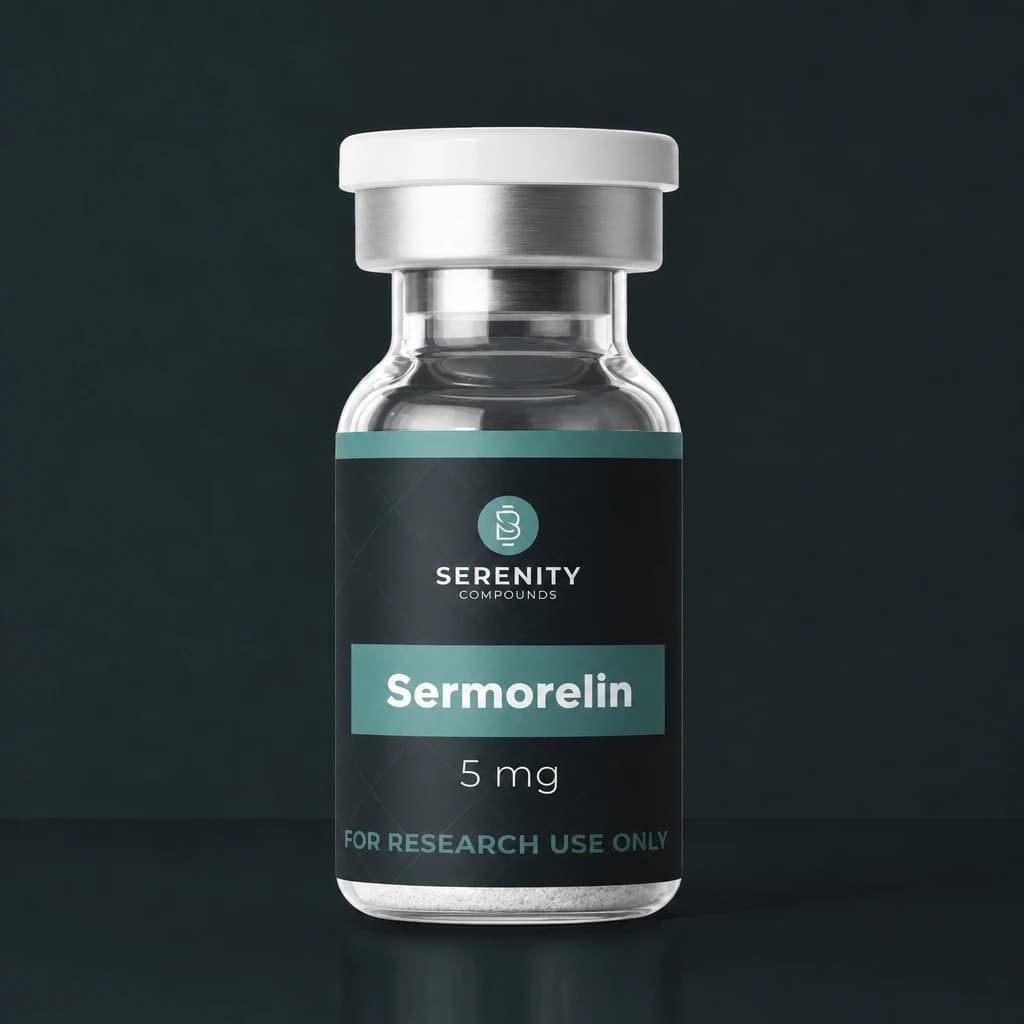
Sermorelin before and after photos don't establish what caused a change in appearance. Training, food intake and image conditions can all change between pictures. Research on a GHRH fragment may help explain endocrine responses, but it doesn't turn an uncontrolled photograph into proof of muscle gain or fat loss. A meaningful comparison needs a defined outcome, consistent measurements and a way to distinguish the studied intervention from other changes. No human use regimen or expected transformation is provided here.
What can a transformation photo actually show?
Images can document visible appearance at two moments. Their evidentiary value depends on whether the conditions are comparable and the record is complete. Camera height changes proportions. Directional lighting changes shadows. A different pose can make a muscle look more prominent without any tissue growth. None of those effects requires deliberate deception, which is why a convincing picture can still be scientifically uninformative.
Timing introduces another source of variation. A photograph taken after exercise may look different from one taken after rest. Hydration and recent food intake can affect appearance as well. Even when a photographer standardizes the background and distance, these physiological conditions may remain uncontrolled. Visual consistency is helpful documentation, but it doesn't replace a measured outcome or establish the cause of a change.
Selection also matters. An online gallery usually doesn't show everyone who started an intervention, including people with no visible change or those who stopped early. Without that denominator, readers cannot estimate how common an apparent result was. A dramatic example may be real and still be unrepresentative. Before interpreting a gallery as evidence, ask how images were selected and whether the full group was followed.
Sermorelin benefits: which outcomes would answer the claim?
Body weight is easy to record but combines fat, lean tissue and water. A lower number doesn't identify which component changed. Conversely, stable weight can coexist with changes in body composition. A study designed around appearance should explain why its chosen measurements address the claim rather than assuming that every change on a scale represents an improvement in the tissue of interest.
DXA estimates fat mass and lean soft tissue under a specified measurement model. Lean soft tissue isn't a direct count of skeletal muscle fibers. Hydration and testing conditions can influence interpretation, particularly when small changes are compared. Consistent equipment and analysis procedures improve comparability, but they don't remove every source of error. Researchers should report the method's precision and avoid treating a tiny difference as a certain biological effect.
Strength testing addresses performance rather than appearance. Familiarity with a movement can improve a score even without hypertrophy. Training volume and encouragement can influence results too. A useful protocol therefore specifies the test and attempts to keep testing conditions consistent. An endocrine marker doesn't substitute for that measurement, just as a larger muscle image doesn't prove that a participant can perform a task more effectively.
Sermorelin peptide studies and the limits of endocrine evidence
Published research includes a small study of older men over six weeks. Its population and duration limit how widely the findings can be applied. It wasn't a test of an online transformation gallery or a verification of Serenity product outcomes. Readers need to distinguish the study's measured endpoints from later interpretations that attach broader physique expectations to the same molecule name.
Another GHRH 1-29 investigation examined hormone responses in older men. Changes within an endocrine system can help researchers investigate mechanism, but they don't establish every downstream benefit claimed in advertising. The identity and biology guide explains the receptor pathway and why chemically modified analogs should not be pooled as though they were identical material.
Age is a particularly important boundary. A selected group of older participants isn't automatically representative of young people following a resistance training program. Baseline physiology and health status may differ. Extending findings from one population to another is an inference that needs additional evidence. It shouldn't be disguised as an expected result or a standard timeline for someone viewing a before and after comparison.
A hypothetical transformation claim, examined step by step
Suppose an advertisement reports a three kilogram reduction in body weight alongside a sharper looking photograph. The record says nothing about food intake and contains no comparison group. That information supports a limited observation: the recorded weight was lower at the second measurement. It doesn't establish how much fat changed or which part of the person's routine caused the difference. The example is fictional and isn't a Serenity customer result.
Adding a body composition scan would address some uncertainty about tissue estimates, but attribution would remain unresolved. If the person also began a new exercise program, both changes occurred during the same interval. Researchers cannot separate their contributions from a single uncontrolled record. More measurements improve description, while a suitable comparison design is needed to strengthen an explanation of cause.
Imagine instead that a controlled study measured a prespecified tissue endpoint in comparable groups. The analysis would still need the difference between groups rather than only the improvement within one group. Both groups might change over time because of common training or measurement effects. A treatment group can improve from baseline without outperforming the comparison condition. Headlines that omit this distinction often overstate what the experiment found.
Why is a universal results timeline misleading?
Duration determines what a study can observe. A brief experiment may capture a hormone response but not establish a durable body composition effect. Longer observation creates opportunities to assess persistence, although it also introduces more changes in behavior and exposure. There is no scientifically justified way to convert a hormone sampling interval into a guaranteed number of weeks until a visible transformation appears.
Attrition affects timelines too. If only participants who completed the study are shown, the apparent average may exclude people who stopped because of adverse events or lack of benefit. The reasons for missing follow up matter. A clear report describes how many people entered, how many were assessed at each time point and how missing data were handled in the analysis.
Safety cannot be judged from appearance. Someone can look different in a photograph while experiencing an adverse event that isn't visible. Short reports with few participants may also miss uncommon problems. Neither an attractive image nor the absence of a complaint in a testimonial establishes safety. Clinical questions belong with a qualified healthcare professional, not a research supplier's transformation gallery.
How should laboratory buyers interpret related product claims?
Catalog descriptions concern the identity and specification of research material. Serenity's sermorelin listing isn't evidence that a person will experience the outcomes described in a publication. The study material's formulation and manufacturing context may differ from a catalog reference. A shared chemical name doesn't bridge those differences or authorize human administration of a research product.
Analytical documents answer narrower questions. A lot report may support an identity or purity assessment under the stated method. It doesn't document a clinical result, prove that a product is safe for injection or validate an advertised timeline. Keeping procurement evidence separate from outcome evidence helps prevent a laboratory certificate from being used as a substitute for a controlled study in people.
Comparisons with other secretagogues require the same discipline. Different receptor pathways don't produce an automatic ranking for physique results. Our comparison of receptor mechanisms focuses on what can be tested and what remains uncertain. It doesn't treat anecdotes about one compound as a valid control group for anecdotes about another.
Questions behind transformation searches
Does sermorelin work?
Define the proposed result before evaluating an image. A measured hormone response, a change in lean tissue and improved strength are different outcomes. The cited endocrine studies cannot validate a gallery whose material and concurrent interventions are unknown. The relevant evidence must address the particular result claimed, not merely share the compound name.
What does sermorelin do?
Mechanistically, the GHRH fragment is investigated for its role in stimulating growth hormone release. That helps explain why researchers measure endocrine responses. It does not establish what caused a photographed change in appearance. A useful transformation analysis still needs a controlled comparison and a direct measurement of the tissue or function being discussed.
What would make the evidence more useful?
Transparent reporting would identify the exact intervention and record concurrent changes in training or nutrition. Measurements would use a consistent method with a defined primary endpoint. A suitable comparison group would help estimate the change attributable to the studied condition. The report would include uncertainty and adverse events rather than showing only the most favorable picture or time point.
Ultimately, judge a transformation claim by the information missing from it. If the record has no denominator, no measurement method and no credible comparison, its limitations remain even when the images are striking. Published endocrine findings deserve to be read on their own terms, without being stretched into a promise about how a laboratory reference will change someone's body.