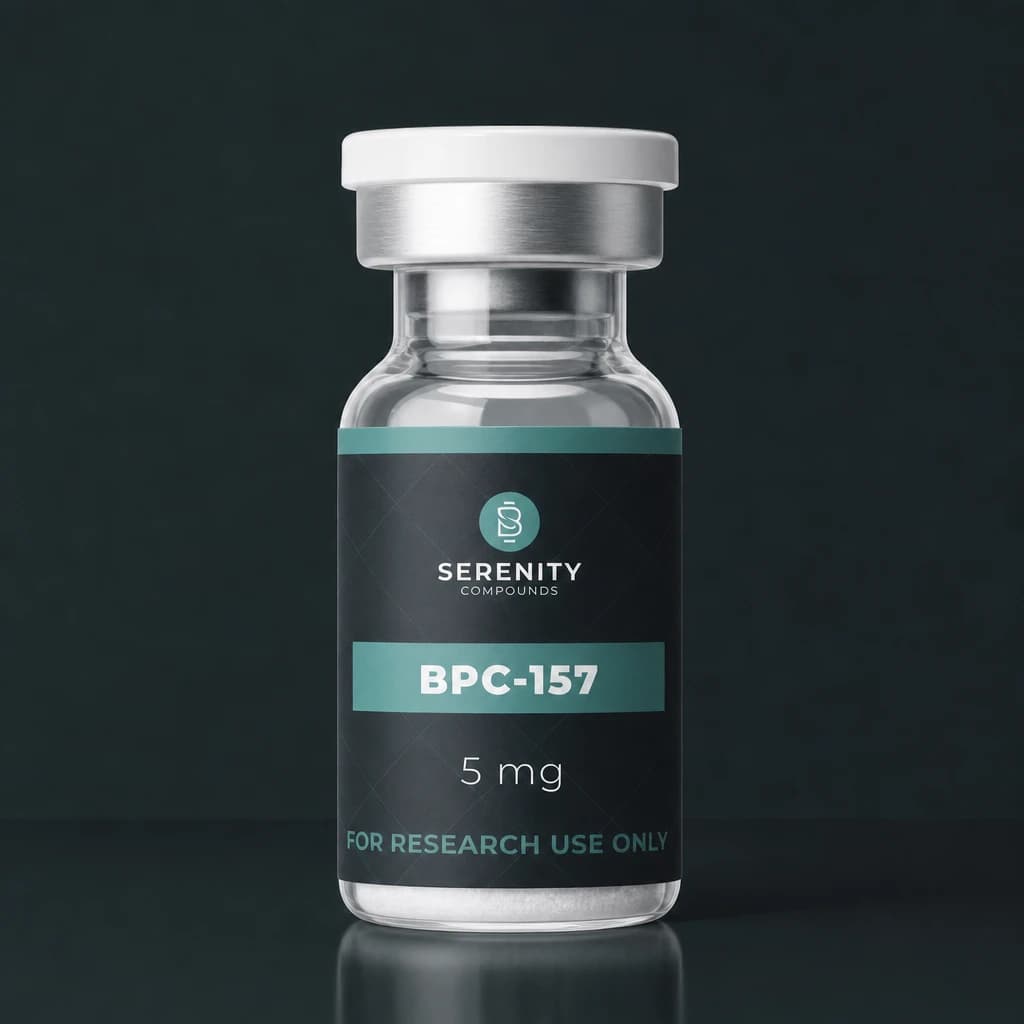
BPC 157 side effects cannot be reliably reduced to a short list copied from testimonials. The evidence needed to estimate human risk is different from the evidence used to investigate a cell response or an animal tissue model. Limited reporting doesn't establish that a compound is safe, and a purity result cannot replace clinical safety data. This article explains how to assess those gaps without recommending a human dose, administration route or self experiment.
What does an adverse event report establish?
An adverse event is an unwanted occurrence recorded during an observation period. Its occurrence doesn't automatically prove that the studied intervention caused it. Causality assessment depends on timing and other evidence, including comparison groups where available. A careful report separates the event record from the authors' interpretation of its relationship to the intervention. Informal discussions often collapse those two steps into a single unsupported conclusion.
Frequency requires a denominator. Ten reports among a hundred monitored participants mean something different from ten posts in an online group of unknown size. Internet discussions generally don't reveal how many people used a material, how many had no symptoms or how many never reported their experiences. They can raise questions, but they usually cannot provide a dependable rate or a comparison with an untreated group.
Severity and seriousness aren't synonyms. Intensity is one feature of an event, while seriousness concerns defined clinical consequences. A study summary should preserve the categories used by the investigators. Calling every event mild because most reports fit that description can obscure exceptions. Calling every symptom a serious reaction can be equally misleading when the underlying record doesn't support that classification.
BPC 157 peptide studies: what the laboratory literature answers
Research includes a tendon fibroblast investigation examining receptor expression and related cellular responses. That type of experiment can address a mechanistic question within its model. It doesn't estimate adverse event rates in people or establish safety during prolonged exposure. A cellular finding shouldn't be turned into reassurance about clinical risks the experiment wasn't designed to measure.
Animal models can provide additional information about biological responses and potential hazards. Translation still depends on the species and exposure conditions. A study that reports a favorable tissue endpoint may not have collected the measurements needed for a comprehensive toxicology assessment. The absence of an adverse finding in its results section may mean the relevant outcome was never assessed rather than that a risk was excluded.
Our molecule and tissue research guide addresses the broader evidence context. This safety article serves a different purpose: it asks whether a source can support a claim about harm. Keeping those questions separate prevents a paper selected for an interesting mechanism from being reused as a blanket safety certificate.
What concerns has FDA identified?
FDA's bulk substance safety information identifies concerns for BPC-157 involving immunogenicity and peptide related impurities, with limited safety information for proposed administration routes. That regulator statement is not a quantified prediction of an individual's risk. It does show why absence of extensive human data cannot reasonably be presented as proof of safety. The source was checked on September 5, 2026.
Immunogenicity concerns involve the possibility of an immune response associated with a material. Whether a particular preparation produces such a response requires appropriate evidence. Identity and impurity characterization are relevant, but a nominal purity figure doesn't describe every potential factor. The analytical method and its limitations matter when assessing what has actually been excluded from a sample.
Regulatory language should remain precise. A supplier's research use statement doesn't make a product an approved medicine, and a scientific publication doesn't change that status. This article doesn't offer legal advice about an individual transaction or a clinical assessment of a person's exposure. Those questions require the appropriate qualified professional and current information for the specific circumstances.
Why are online symptom lists unreliable?
Product identity may be unknown in an anecdote. The person reporting an experience may not have independent confirmation of the sequence or formulation. Other substances and concurrent health conditions can complicate attribution. Even an honest account with detailed timing may leave the central causal question unresolved. Repeating the report across multiple websites doesn't create independent evidence or verify the material involved.
Expectation can influence which sensations receive attention and how they are described. Conversely, someone who expects no risk may overlook or fail to report a problem. Neither possibility means a person's experience should be dismissed. It means that standardized collection and appropriate comparison are important when moving from individual accounts to claims about the frequency or cause of adverse effects.
Selection affects reassuring accounts too. A forum filled with positive reports may exclude people who left after an unfavorable experience. A supplier testimonial page is not a complete safety registry. Counting positive and negative comments as though they were randomized observations creates a false impression of precision. The missing denominator remains missing even when the number of comments is large.
A hypothetical zero event study
Suppose a fictional study observes 20 participants for a short interval and records no event of a particular type. That result doesn't prove the event is impossible. A rough statistical rule for zero observed events places an approximate upper 95% bound near three divided by the number observed, under suitable assumptions. Here that would be about 15%, illustrating how much uncertainty can remain in a small sample.
Importantly, that illustrative calculation isn't an estimate of this compound's risk. It assumes a defined event and adequate observation, and the approximation has limitations. If follow up is incomplete or the event isn't systematically collected, even the fictional bound may be unhelpful. The example explains why a claim of zero reported events should be accompanied by the sample size and collection method.
Longer observation answers different questions from a brief exposure window. Some outcomes may not occur or become detectable during a short study. A report can therefore be accurate about what it observed while remaining insufficient for a claim about extended use. The appropriate conclusion should state the observation period rather than implying that the safety question has been settled indefinitely.
BPC 157 benefits and purity claims do not establish safety
Chromatographic purity is method dependent. It describes the relative signal under stated conditions, not a universal inventory of every substance in a vial. Identity testing adds information about the target material, while other quality attributes need other methods. None of those measurements alone establishes the clinical safety of the compound itself or of a particular administration route.
Sterility and endotoxin are separate concepts from peptide purity. A clean chromatogram doesn't establish either one. A research product should never be presented as suitable for injection because an analytical report contains a high percentage. Our certificate interpretation guide explains how to connect specific test claims to the methods that can support them.
Serenity's BPC-157 catalog page describes research material and its documentation context. It isn't a medical product label or a source of human safety instructions. A laboratory evaluating the reference should connect the material to its lot records and assess suitability for the actual experiment, without treating procurement documentation as evidence of a treatment outcome.
Questions from the BPC research cluster
Is BPC 157 safe?
Current evidence does not support a universal assurance for a research reference. The relevant question includes its identity, preparation and intended exposure, together with the population and monitoring behind any clinical claim. A zero event report needs those details before interpretation. A chromatographic result cannot provide the missing safety observations.
Does BPC 157 work?
Effectiveness and safety are separate questions, each requiring a defined endpoint. A favorable tissue model observation cannot establish a human benefit or exclude harm. Assess whether the source directly measured the proposed outcome and whether its design supports that conclusion. Repeating a mechanistic result in a safety discussion does not broaden what the experiment tested.
What should a responsible safety summary contain?
Start with the exact material and the model or population. Identify how events were collected and how long observation lasted. Preserve the comparison condition and the number of participants assessed. Distinguish events observed from risks merely hypothesized, then state what the evidence cannot determine. This approach is more useful than assembling a list of symptoms without any indication of where the claims came from.
Uncertainty should not be softened into reassurance or exaggerated into certainty of harm. The justified position may be that a particular risk hasn't been adequately characterized. That is meaningful information for a reader deciding how to interpret research claims, even though it doesn't provide the simple yes or no answer often implied by commercial discussions.
Finally, anyone experiencing symptoms after an exposure should seek qualified medical advice rather than using this research article to diagnose or manage them. Severe or rapidly worsening symptoms warrant urgent care. The purpose of this page is to clarify evidence limits, not to supply a human protocol or a checklist that makes unsupervised use safe.