Knowing how to read a peptide COA starts with matching the report to the received lot, then asking what each test measured. Identity asks whether evidence supports the named material. Purity describes a method specific result. Neither automatically establishes quantity, sterility or suitability for human use. A useful review preserves those distinctions instead of treating the certificate as one general quality score.
Does the report match the vial?
The supplier's product name and lot number should connect the document to the material in hand. A report for a similarly named product or an earlier batch does not establish the condition of the received lot. Dates help distinguish when a sample was received or analyzed from when a certificate was issued.
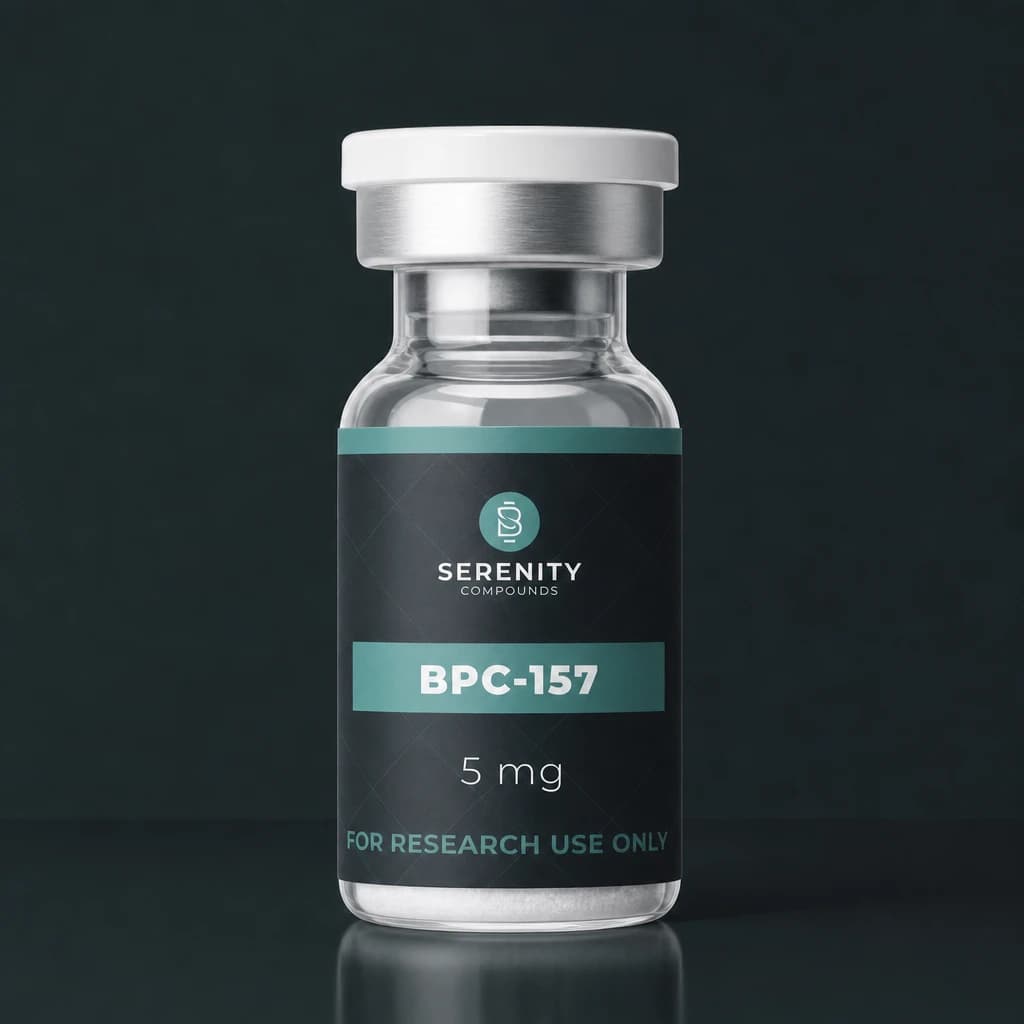
Serenity's COA library provides the document navigation point. For a selected BPC-157 reference, compare the available report identifiers with the associated lot information. If the relationship is unclear, that is a documentation question to resolve rather than a match to assume.
What does a hypothetical report show?
Imagine a report labeled compound A, lot L-27, with an identity result described as consistent with expected mass and a purity result of 98.7% by HPLC peak area. The identity statement describes one line of evidence. The percentage describes the relative detected area under that chromatographic method. Neither line says that 98.7% of everything in the vial is active peptide by weight.
Water, counterions and substances poorly detected by the method can affect the relationship between peak area and total material content. A content assay may answer a different question. The report should state whether the amount in the vial was measured or merely repeated from the submitted sample description.
Can expected mass prove the sequence?
Mass agreement can support identity but may not distinguish all structural alternatives. Some different sequences or isomers can share a mass. Whether additional characterization is needed depends on the material and the intended analytical claim. A report is stronger when its conclusion stays within what the method can distinguish.
What should the chromatogram tell a reader?
Chromatographic separation depends on the method. The main peak assignment and integration approach influence the reported percentage. A clean looking trace is useful information only when the sample and method are clear. It should not be treated as a universal certificate of every possible impurity's absence.
Unresolved peaks can complicate interpretation. If two species coelute, the apparent main peak may include both. Asking whether the method is suitable for the relevant impurities is more informative than comparing percentages from unrelated methods as though they were measured on the same scale.
Which tests cannot be inferred from purity?
Sterility and bacterial endotoxin testing address questions that a typical identity or purity result does not answer. A certificate without those tests should not be described as demonstrating them. Visual clarity and research labeling cannot supply the missing evidence either.
Biological activity is another separate property. A material can appear chemically consistent while producing an unexpected response in a functional assay. The report needs an actual relevant activity test before a claim about potency can be attributed to that certificate.
How should a discrepancy be recorded?
Suppose a vial reads L-72 while the report reads L-27. Preserve both identifiers and document the request for clarification. Replacing one number with the other would erase the observation that needs investigation. Our chain of custody guide follows a similar example through later sample transfers.
Receiving procedures should define the material's status while the question is unresolved. The accessioning article explains how an internal material identifier can keep the vial connected to its documents without pretending a discrepancy is already settled.
Research grade peptides: specifications versus reported results
Specifications describe acceptance requirements, while results describe what a test found. A certificate should make the distinction visible. A line that says purity greater than 98% may be a specification rather than the measured value for the submitted sample. If the layout is ambiguous, ask which column contains the result. Otherwise, a general target can be mistaken for an actual batch measurement.
Pass language also needs a defined criterion. It may indicate that a result met a supplier's threshold without showing the numerical observation. That can be adequate for some procurement requirements and insufficient for others. The intended laboratory method determines what detail is necessary. A pass label is not more informative simply because it appears beside a laboratory logo.
Comparing research peptides tested by different methods
Detector response affects the interpretation of a chromatographic percentage. Different compounds can produce different signal strengths under the same detection conditions. Peak area therefore cannot be assumed to equal mass fraction without a suitable quantitative basis. Comparing two reported purity values is most useful when the methods, sample preparation and integration rules are sufficiently comparable for the intended decision.
Detection limits define another boundary. An impurity not reported by a method may be absent, below the method's capability or outside the scope of the test. A claim of zero impurities would require more than a report showing no detected additional peaks. Read the result in relation to the method's sensitivity and the substances it was designed to assess.
Quantity, peptide content and nominal vial mass
Consider a hypothetical report that repeats a submitted description of 10 mg but provides only identity and peak area purity results. That does not establish that the laboratory independently measured 10 mg of peptide in the vial. The submission field may simply reproduce information from the sender. A quantitative content result needs an appropriate method and a stated basis, not just a matching number in the document header.
Counterion and water measurements can help explain why dry mass differs from peptide content. Those contributions are not automatically impurities in the same sense as an unwanted peptide species. The relevant question is how the reported form and content relate to the calculation being planned. Applying a peak area percentage directly to gross vial mass can create a false impression of analytical precision.
Reports for blends and copper containing references
Mixtures require enough separation or other characterization to address their intended constituents. A single headline value may not establish each component's identity and amount. If a method reports a combined peak or only one major component, the remaining composition questions persist. A blend certificate should be evaluated against the component information needed by the experiment rather than against the appearance of a single compound report.
Metal containing references introduce another measurement category. Total metal content and peptide identity can each be informative without proving the exact species present in a prepared solution. The report should state what was measured and in which sample state. A result for dry material cannot automatically describe every complex that may form after it enters a different matrix.
Following a corrected or replaced certificate
Revisions should be linked to the report they replace. Preserve the reason for the change and the identifiers needed to connect older records with the corrected document. If a correction affects material acceptance, the decision should be reconsidered explicitly. A replacement PDF should not erase the evidence trail explaining why the original report was questioned or which experiments relied on it.
What are research peptides?
They are peptide materials supplied for research purposes, with specifications that may vary by product and supplier. The research label does not define a universal certificate format or guarantee that every relevant test was performed. A laboratory should identify its required material properties first, then check whether the available documentation actually supports those requirements for the received lot.
Are research peptides safe?
Chemical test results cannot supply a general human safety conclusion. A certificate addresses its stated analytical questions, not every consequence of exposure to the material. Even a well documented reference remains subject to its research use limitations. For the laboratory's own risk assessment, use the relevant safety documentation and established handling procedures rather than treating the purity percentage as a substitute for hazard information.
What makes a certificate useful for a decision?
Match each required claim to an actual reported method and result. Record what remains unknown. A certificate can support a laboratory procurement decision when its evidence fits the method's requirements, but it does not turn a research reference into an approved clinical product.