Understanding how to reconstitute peptides for research begins with a defined material and a suitable laboratory method. The compound's identity and solution compatibility must be established before arithmetic can describe the preparation. There is no universal solvent or volume for all peptides. This article explains the evidence needed, not a recipe for human administration.
What should be resolved before a preparation is planned?
The selected sequence and chemical form should match the method. A catalog nickname or a spelling correction cannot establish that identity. The record also needs to distinguish nominal vial content from an amount supported by a quantitative analytical measurement.
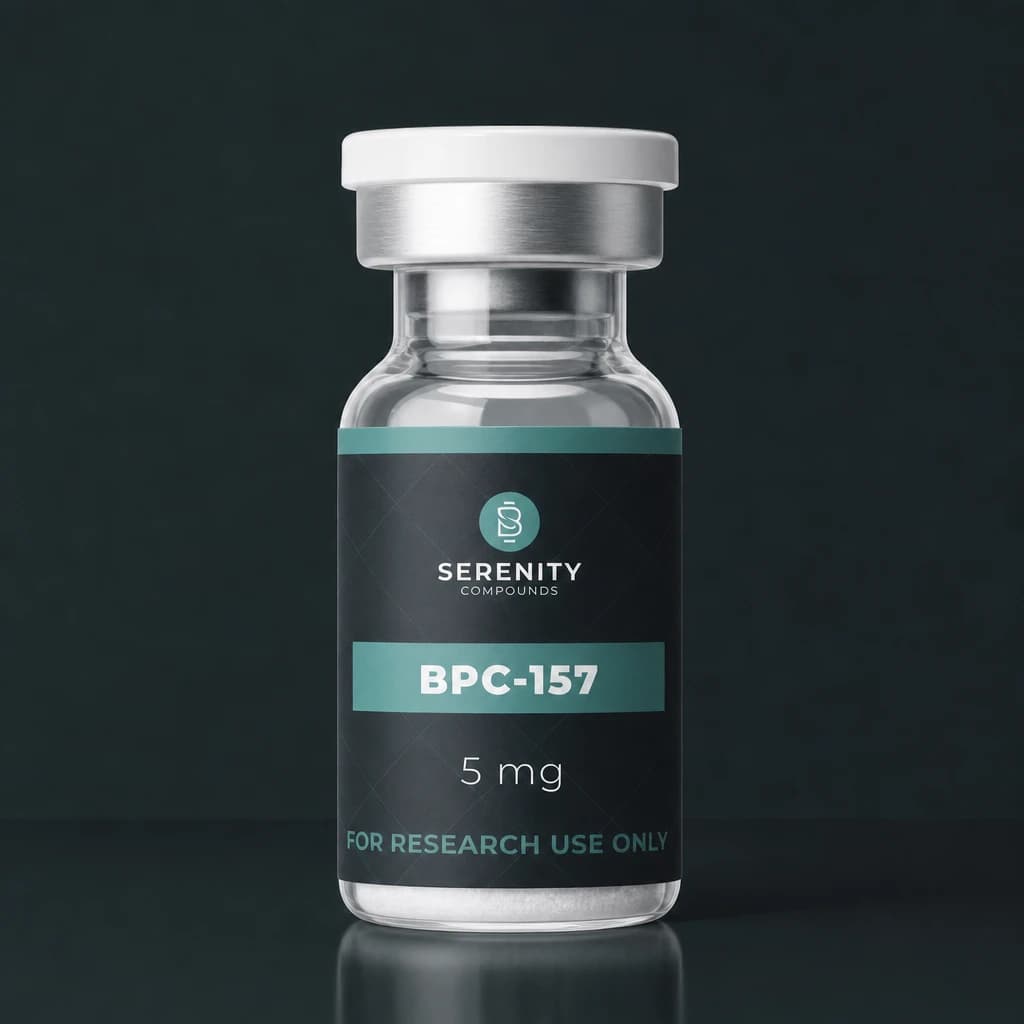
Serenity's BPC-157 reference is one example of a material whose lot documentation should remain connected to the preparation. The COA guide explains why identity and purity results cannot automatically establish the exact mass available for an assay.
Why can't one diluent be recommended for every material?
Solubility and chemical stability depend on the compound and its environment. A solvent that produces a clear solution may still be unsuitable for the downstream assay. The preparation method needs evidence for the specific material and intended measurement rather than a general rule copied from a forum.
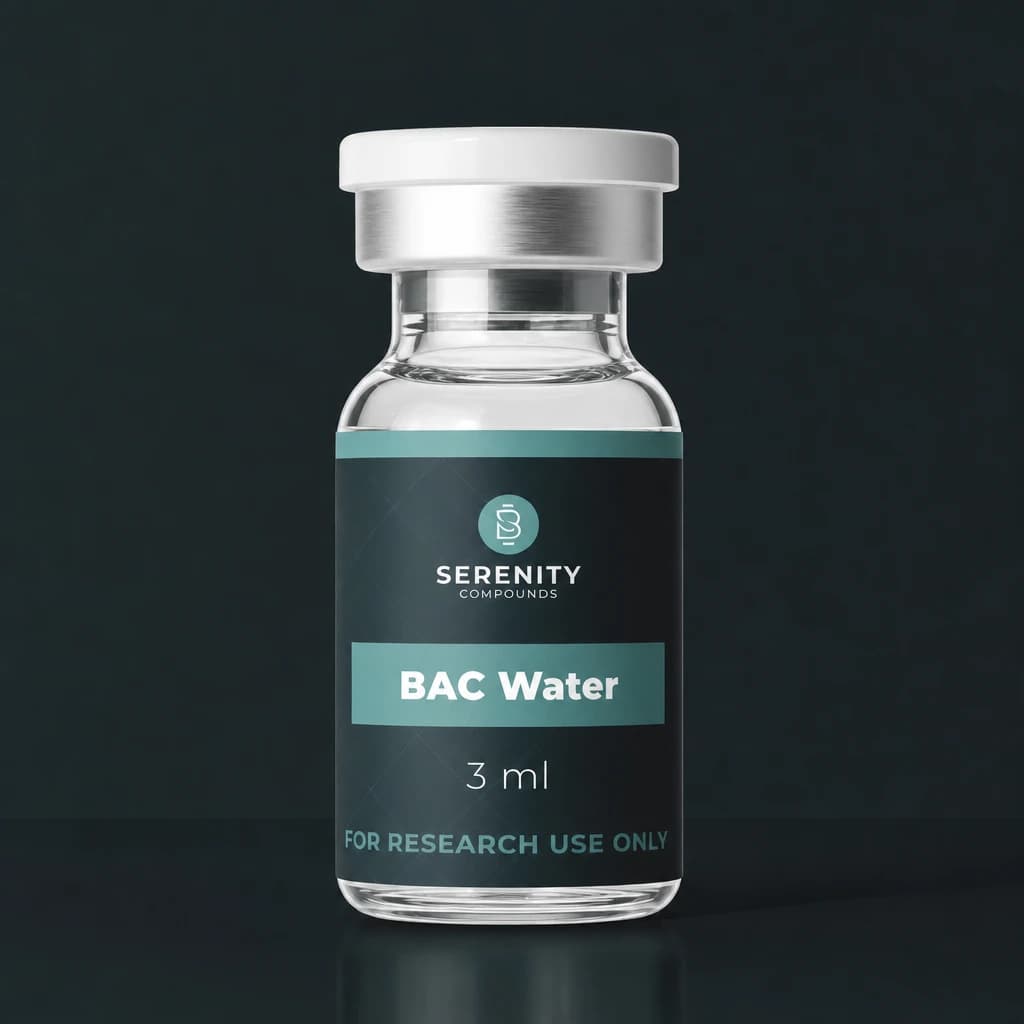
Preservatives introduce another variable. The bacteriostatic water reference should be assessed through its actual formulation. Our preserved and unpreserved water comparison explains why a preservative can matter to biological or analytical interpretation.
Does a clear solution prove successful preparation?
No. Clarity cannot establish sequence identity or concentration. It also cannot demonstrate sterility or rule out chemical degradation. Visual observations are useful records, but they should remain observations rather than being upgraded into analytical conclusions.
What does the concentration calculation require?
Mass and final volume must use explicit units. The starting amount should state whether it came from a label or a measurement. If a method defines final volume differently from solvent added, that distinction needs to survive in the worksheet.
For a hypothetical analytical example, 3 mass units in 6 final volume units yields 0.5 mass units per volume unit. The calculation says nothing about whether the material dissolves or remains stable. The calculator guide extends this arithmetic to a later assay dilution without selecting human amounts.
What if the recovered amount differs from the nominal amount?
Adsorption or incomplete recovery can change the concentration available to the method. A preparation may look normal while the actual recovered amount differs from the calculation. If that uncertainty matters to the experiment, an appropriate quantitative method is needed to investigate it.
Different containers or solution backgrounds can also complicate comparisons between preparations. The record should identify the conditions that were actually used. Repeating only the original label amount leaves no way to distinguish a calculation problem from a material recovery problem.
How should storage after preparation be justified?
Stability claims need evidence for the actual solution and conditions. A dry material storage instruction does not automatically establish a prepared solution's usable period. Generic refrigerator windows taken from another compound or supplier leave that question unanswered.
Time and temperature records describe exposure but do not measure chemical change. A suitable assay and acceptance criterion are needed if a claim depends on the preparation remaining within a defined specification. Appearance alone cannot supply that evidence.
Peptide reconstitution: solubility is not assay compatibility
Dissolution addresses whether material enters a solution under the selected conditions. Compatibility asks whether that solution can be used in the intended measurement without an unacceptable effect on the system. A preparation can meet one requirement and fail the other. The distinction is especially important when a biological assay is sensitive to the solvent background or when the reference interacts with an analytical reagent.
Vehicle controls should reflect the actual background introduced into each condition. If different stock concentrations lead to different solvent contributions, a single unmatched control may leave an alternative explanation unresolved. The method should explain how that comparison is handled. Reporting only the peptide concentration can hide a changing matrix that influences the apparent response across the series.
Reconstituted peptides and the meaning of recovery
Nominal recovery based on a label is not an analytical result. A laboratory may calculate the expected concentration correctly while recovering less intact material than assumed. Losses can occur during transfers or through interactions with the container. A suitable recovery assessment investigates the prepared sample rather than repeating the starting arithmetic. The required method depends on which species and quantity the assay needs to establish.
Amount accounting can help organize an investigation without identifying its cause. If the measured output differs from the expected input, the record should preserve both values and their bases. It may be necessary to distinguish incomplete transfer from chemical change or a measurement issue. Adjusting the nominal concentration until it matches an expected biological result would replace evidence with an assumption.
Comparing single peptides, blends and metal complexes
Mixtures introduce component specific questions. A total blend concentration does not establish each constituent's concentration unless the composition is known. If one ingredient behaves differently during preparation, the final ratio may differ from the nominal ratio. Analytical separation or another suitable measurement is needed when the experiment depends on knowing that composition. A clear solution cannot verify it.
Copper containing complexes require attention to the solution environment as well as the starting ligand. Other components in a medium can affect coordination. A report characterizing the original reference therefore does not automatically describe every species present in a later assay. The preparation record should identify the actual matrix and the claim the chosen analytical method can support.
Reconstitution peptides searches and misleading volume rules
Vial size cannot determine a scientifically justified preparation by itself. Two laboratories may require different final concentrations because their methods ask different questions. A volume chosen solely for convenient arithmetic does not establish solubility or compatibility. The correct relationship runs from the validated method and material specification to the worksheet, not from a popular online volume to an assumed method.
Added solvent and final solution volume also need to remain distinguishable. If the method specifies one, the record should not silently substitute the other. Both are valid kinds of measurement in an appropriate procedure, but they are not interchangeable labels. A calculator can divide by either number without detecting that the wrong quantity was entered for the intended formula.
Handling deviations without inventing a new protocol
Unexpected appearance or a missed handling condition should be recorded as a deviation requiring review. The observation may identify a problem without revealing its chemical cause. Follow the laboratory's process for deciding whether further characterization is needed. An improvised adjustment copied from a forum can change the preparation again while making the history harder to interpret.
Preparation identifiers should connect the original lot to every later analytical sample. If a solution is divided into aliquots, retain the parent relationship and the relevant handling dates. This allows a later comparison to determine whether an inconsistent result tracks with a particular preparation. The supplier lot alone may be too broad when several solutions from that lot have different histories.
How much bac water should be used to reconstitute peptides?
There is no universal amount or automatic diluent choice. The material specification and laboratory method must support the matrix and desired concentration. Preservative compatibility is a separate requirement from volume arithmetic. A standard number copied across compounds cannot establish those conditions, and this research discussion does not supply a preparation recipe for human administration.
How to store peptides after reconstitution?
Use evidence for the actual prepared solution and the property required by the method. The supporting record should identify the matrix, container and conditions studied. A generic refrigerated interval cannot replace that evidence. Keep the preparation date and subsequent handling history connected to the sample so that any acceptance decision refers to what actually occurred rather than an assumed universal rule.
What makes a procedure reproducible?
Preserve the material identity and source lot with the method reference. Record the prepared sample identifier and the basis of the concentration. Keep deviations and unexpected observations visible so another analyst can understand what happened. Reconstituting peptides under a documented research method does not authorize personal use, and a disclaimer cannot turn a forum dosing recipe into a validated procedure.