MOTS C dosage charts are interpretable only when each value retains its model and units. A concentration describes an amount per volume, while an animal exposure may be reported relative to body mass. Neither supplies a human regimen. The worked example below is hypothetical laboratory arithmetic, not a recommendation for administration.
What does the research literature describe?
The original mitochondrial peptide study investigated a 16 residue sequence and metabolic responses in preclinical systems. Later mouse metabolite research examined additional endpoints. Each publication's material and experimental conditions belong alongside its results.
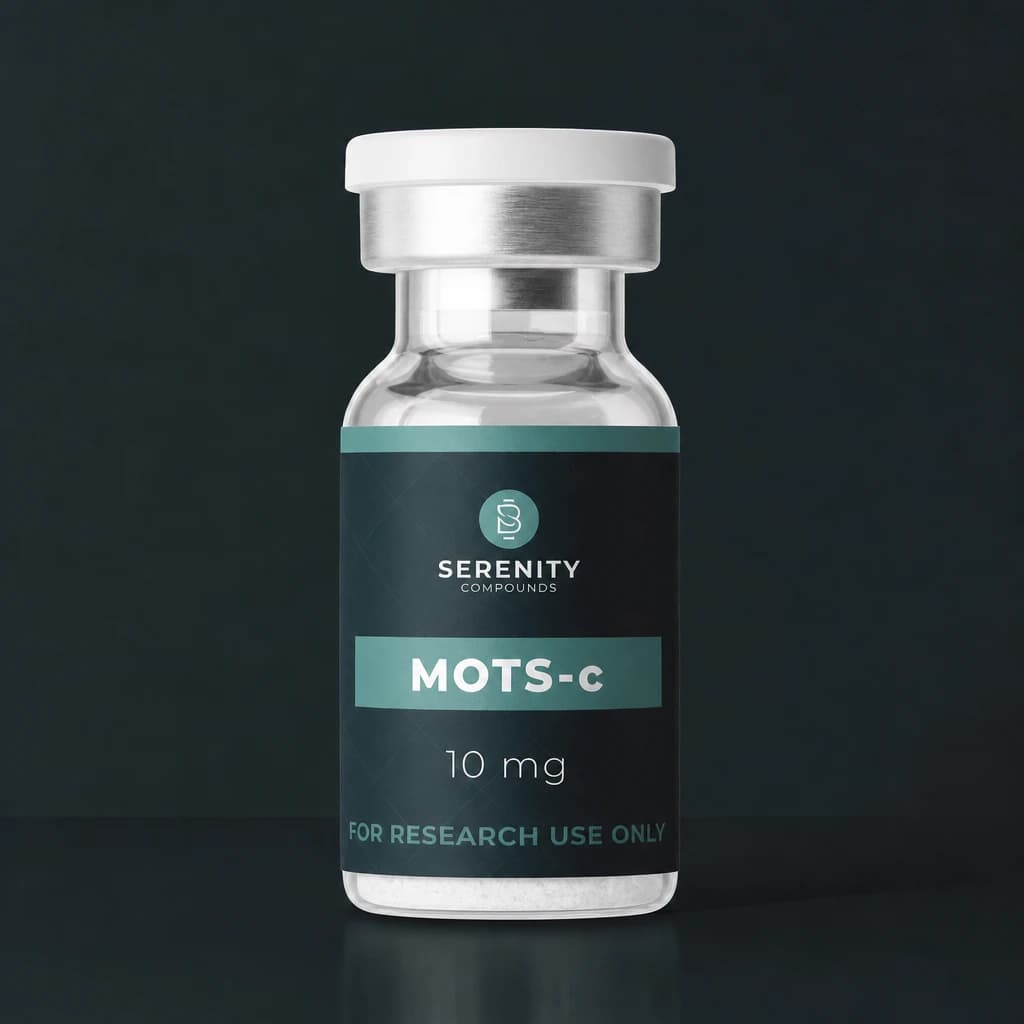
Serenity's MOTS-C peptide reference is a separate procurement item. A published paper does not characterize that lot. The source audit guide explains how to connect chart values to their original experiments and distinguish that task from evaluating a supplier's documentation.
Which quantities belong in separate columns?
Nominal vial content, prepared stock concentration and final assay concentration describe three different stages. Keeping them separate makes it possible to see where a calculation changes units or introduces a dilution. A column labeled amount without a unit cannot preserve that information.
Mass concentration and molar concentration also differ. Converting between them requires the applicable molecular mass and a clear understanding of the chemical form. A value copied from a different sequence or salt specification may introduce an error even if the division is performed correctly.
A hypothetical dilution example
Consider a generic analytical stock measured at 200 micrograms per milliliter. A method combines 0.1 milliliter of that stock with enough compatible matrix to give a final volume of 2 milliliters. The transferred mass is 20 micrograms, so the final nominal concentration is 10 micrograms per milliliter.
Notice that the final volume includes the transferred stock. Treating the additional matrix volume as the final volume would use the wrong denominator. The example uses arbitrary values to show the calculation and does not select conditions for this compound or any biological subject.
Where does a serial dilution create another risk?
An intermediate solution becomes the starting concentration for the next step. Accidentally reusing the original stock value can multiply the error across the series. The calculator guide explains how to preserve the concentration at each stage and check that the units cancel correctly.
Does a correct chart establish the actual exposure?
Calculated concentration assumes that the inputs and recovery are valid. Material loss or a difference between nominal and measured content can make the actual value different. A worksheet should state whether its starting number came from a label or a quantitative analytical result.
Prepared solution stability is another independent question. A correct concentration at preparation does not establish the same concentration after storage. The analytical method and acceptance criteria need to address the conditions under which the sample is later used.
Why can't animal values become a personal schedule?
Species differences and exposure pathways are biological questions, not unit conversion problems. Scaling an amount by body weight does not establish a safe or effective human regimen. A clinical recommendation requires evidence and oversight that a research calculator cannot provide.
FDA's peptide substance discussion notes limited human safety information relevant to this material. An online table should not conceal that gap by presenting a precise number as though precision itself establishes validity.
MOTS-C dosage versus a metabolic assay readout
Exposure describes what entered the experiment. An endpoint describes what the experiment measured afterward. Those quantities should not be placed in the same table column or treated as interchangeable measures of activity. A glucose result, a signaling measurement and a metabolite abundance each need their own unit and method. The precision of the exposure calculation does not establish the precision or biological meaning of those outcomes.
Metabolomics in the cited mouse study examined changes across plasma metabolite pathways, including sphingolipid related measurements. The work also considered metabolic and tissue related observations in that animal setting. This is more specific than a general claim of improved energy. Its findings cannot determine the outcome of an unrelated cell assay or validate a human schedule copied into a concentration chart.
MOTS C peptide dosing chart: serial dilution accounting
Suppose the hypothetical 10 micrograms per milliliter working solution above is diluted again by a factor of four. The next nominal concentration is 2.5 micrograms per milliliter. Applying the factor to the original 200 micrograms per milliliter stock would instead produce 50, a twentyfold disagreement with the intended series. Labeling each intermediate preparation makes the error visible before an assay result is interpreted.
Dilution factors multiply across sequential steps. A tenfold dilution followed by a fourfold dilution gives an overall fortyfold dilution of the original stock. Adding the two factors would be incorrect. This arithmetic remains general and does not choose scientifically justified conditions for the named peptide. The method must supply the desired exposure range and compatible matrix independently of the calculation.
Mass concentration and molarity in a research table
Molecular mass is needed because molarity counts amount of substance rather than grams alone. The applicable value should match the specified sequence and chemical form used as the calculation basis. If the record describes a salt or includes a content correction, document how that information enters the calculation. An unexplained conversion can appear precise while using a different material basis from the starting amount.
Significant figures should reflect the inputs rather than the calculator display. A nominal amount with limited precision does not become a highly precise concentration after division. Rounding should be consistent and should not conceal a meaningful difference between target and calculated values. Retaining the unrounded calculation in the worksheet can help review arithmetic while the reported result reflects the justified precision.
MOTS C dosing protocol and uncertainty sources
Pipetting uncertainty contributes to a dilution even when the formula is correct. Very small transfers can make a particular setup impractical relative to the equipment's validated range. The appropriate response is a method review, not simply displaying more decimal places. A reproducible worksheet should identify the actual transfer and final volume rather than recording only the desired dilution factor.
Recovery is a separate analytical question. Adsorption, incomplete transfer or chemical change can make the measured sample differ from its nominal preparation. A dilution series based on an incorrect starting concentration carries that discrepancy through every later point. Where quantitative exposure is important, suitable measurements should address the relevant preparation rather than assuming that internally consistent arithmetic confirms its contents.
Storage and batch changes during a concentration series
Preparing some concentrations from an older stock and others from a fresh one can introduce a handling difference into the series. Record which stock supplied each condition and whether their supporting evidence is comparable. If the response pattern changes at the same point as the stock source, that relationship deserves investigation. A concentration label alone would not reveal it.
Batch substitution introduces another possible difference. A new lot may meet the same declared specification while requiring its own identity and content review. Keep the lot connection in the worksheet so that a later comparison can distinguish preparation date, batch and assay effects. Reusing an old accession identifier for a new vial would obscure the very information needed to investigate an inconsistency.
What is MOTS C peptide?
Here the name refers to the 16 residue research peptide discussed in the primary publications above. The catalog reference still needs lot specific characterization before it can serve a quantitative method. A known sequence does not establish the exact content of a particular vial. That is why the worksheet begins with documented material inputs rather than treating the compound name as a complete specification.
What does MOTS-C do?
Published studies investigate metabolic responses in their experimental systems. A calculation table can help reproduce the quantity relationships in a justified method, but it does not predict those responses. Mechanistic evidence, measured exposure and observed outcomes belong in separate parts of the record. Keeping them separate prevents a correct concentration calculation from being presented as proof of a biological benefit.
What makes the worksheet reproducible?
Preserve the source lot and the origin of the starting amount. Record each intermediate concentration and the final volume used in the calculation. A second reader should be able to reconstruct the arithmetic without guessing what a column means. That supports laboratory measurement while leaving human dose selection outside the chart's purpose.