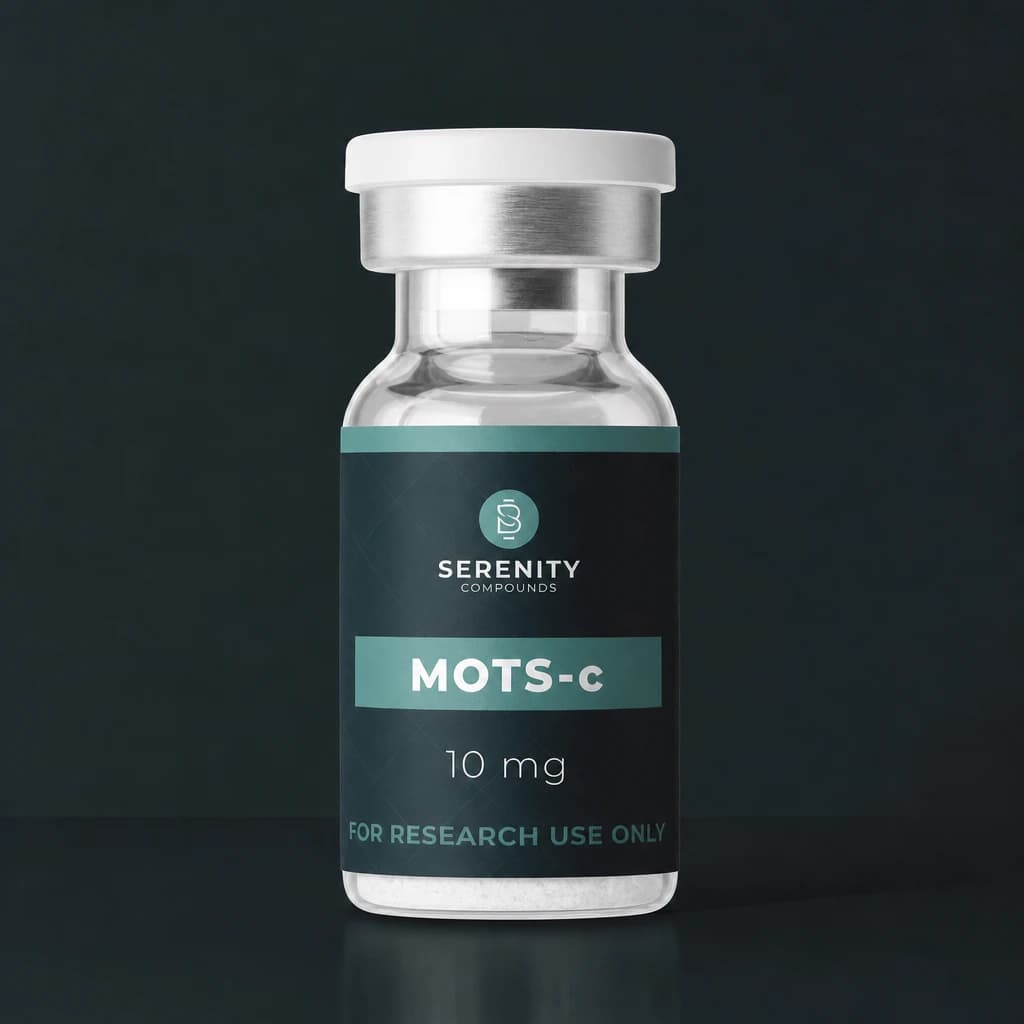
MOTS-C dosing charts need a source audit before their numbers can be interpreted. A useful chart identifies the publication or approved laboratory method behind each exposure and preserves the model and units. A table without that context is not a protocol. This article focuses on evaluating the source and procurement record, not choosing a human amount.
Can the original experiment be identified?
The discovery publication describes a mitochondrial derived peptide and preclinical metabolic experiments. Those findings belong to their tested models. A chart that cites the paper should retain the relationship between each number and the experiment from which it came.
Secondary summaries sometimes omit species or combine values from different methods. Following a citation back to the original paper can expose that loss of context. The presence of a recognizable journal name beside a chart does not prove that the chart accurately represents the source.
What if a chart mixes several kinds of units?
Mass per body weight, solution concentration and total amount are not interchangeable. A supplier may also list a vial's nominal content beside experimental values. Those numbers need separate labels before any comparison is meaningful. Our calculation article addresses the arithmetic once the underlying quantities are clear.
Suppose a hypothetical worksheet lists one value from a mouse paper and another from a catalog vial. Dividing the second by the first does not create a valid number of human administrations. It combines quantities from unrelated contexts and adds a clinical meaning that neither source supplied.
How should the material identity be checked?
Serenity's MOTS-C reference should connect to the selected lot's specification. The peptide sequence and any stated chemical form matter when assessing whether the material fits a method. A short name alone does not resolve differences in analytical characterization.
Purity and content need separate interpretation. A chromatographic percentage does not automatically measure the mass of peptide in the vial. If a method depends on actual content, the procurement review should ask what evidence supports that quantity rather than treating a peak area percentage as a universal correction factor.
What would a documentation discrepancy look like?
Imagine that a quotation names lot C-18 but the report supplied later names C-81. Preserve both identifiers and ask for the documented relationship. A matching product name does not settle the mismatch. The COA guide explains how to record what a report actually establishes.
Does shipping evidence prove stability?
Packaging condition and any available temperature record describe aspects of transit. They do not independently establish that the material remained chemically unchanged. A stability claim needs supporting conditions and a suitable analytical basis for the actual form being supplied.
Receiving records should preserve observations without upgrading them into conclusions. An intact package may support one acceptance criterion while leaving another unresolved. That is more useful than labeling a shipment good based only on appearance.
Which warning signs make a chart unsuitable as evidence?
Untraceable sources and unexplained unit changes are reasons to stop treating the table as a method. Claims that preclinical metabolic findings establish human benefit are another problem. A research disclaimer at the bottom does not correct unsupported instructions in the table itself.
Safety gaps also need to remain visible. FDA's peptide safety information discusses limitations relevant to this material. Procurement paperwork cannot supply missing clinical evidence.
MOTS-C dosage protocol: tracing a number through its source
Begin with the exact table entry rather than the article's overall topic. Record the number, unit and citation attached to it, then locate the corresponding experiment in the primary paper. A publication may contain several models and exposure conditions. Finding the same compound name in the article is not enough to verify that the chart copied the right value or preserved its meaning.
Methods and figure captions can resolve details missing from an abstract. They may identify the experimental group, timing or normalization behind the result. Keep those details with the extracted number. If the chart adds a frequency or duration not found in the source, mark that addition as unsupported. A correct citation cannot validate information that the cited experiment never supplied.
MOTS C peptide research endpoints behind the chart
Metabolic research can measure glucose handling, signaling markers or changes in a metabolite profile. Those outcomes do not have the same meaning. A chart should not describe a cellular marker as a demonstrated change in human energy or exercise performance. The discovery paper is relevant because it establishes a preclinical research context, not because it supplies every later claim attached to the molecule.
Mechanistic plausibility also differs from a validated protocol. An explanation connecting a pathway to metabolism may justify further study without determining an appropriate exposure for a different model. When auditing the source, separate the hypothesis from the measured result and from the author's interpretation. That makes it easier to see which part of a commercial summary goes beyond the evidence.
MOTS-C peptide buy searches: comparing specifications
Compare like quantities before comparing prices. One listing may report nominal dry mass while another supplies a measured peptide content value. A purity percentage may use a different analytical method across suppliers. Those distinctions can affect whether the materials are suitable for the same quantitative experiment. A cheaper nominal amount is not automatically a cheaper amount of analytically established reference.
Ask which lot the available report covers and whether its identity evidence addresses the sequence required by the method. A report presented as an example can describe a testing format without characterizing the next shipment. That limitation should remain explicit in the purchase decision. If current lot information is unavailable, do not convert an illustrative certificate into a confirmed batch result.
Comparing single references with combined research formats
Blend names introduce component accounting that a single sequence chart does not address. If a reference is combined with another material, its individual amount needs to remain visible. Equal total vial masses would not establish equal exposure to the peptide of interest. The procurement record should identify the composition required by the experiment rather than selecting a convenient total and assuming equivalence.
Related analogs require the same discipline. A material described as modified or extended should not inherit the original sequence's literature without a justified comparison. Structural differences can matter even when a seller groups products in one category. Resolve the identity first, then decide which publications are directly relevant and which provide only background for a new research question.
Storage claims as part of supplier evaluation
Transit packaging should be interpreted against a material specification. Insulation or a cooling component shows how the shipment was packed, not whether the contents retained a required property. Useful supporting evidence identifies the relevant conditions and acceptance criteria. If an excursion occurs, retain the observation and the reasoning behind the disposition decision instead of treating intact packaging as proof that no review is needed.
Reconstitution creates a different preparation from the received dry reference. A supplier's unopened material statement does not automatically support a prepared solution's storage interval. The procurement review can identify whether relevant supporting information exists, while the laboratory method determines how it applies. A chart copied from another supplier cannot supply missing formulation evidence for the selected lot.
What is MOTS-C?
It is a 16 residue peptide associated with mitochondrial sequence research and studied in preclinical metabolic models. That identity explains why the literature discusses metabolic endpoints, but it does not establish a human dosing schedule. For procurement, connect the named sequence to the actual lot and its analytical documentation. Literature identity and supplied material verification are related but separate checks.
What does MOTS C do?
Published experiments investigate particular metabolic responses under defined conditions. A source audit should identify exactly which response supports the chart's claim and which model produced it. General language about energy or fat loss can conceal a much narrower endpoint. The useful answer preserves the measured result rather than extending it into a personal benefit claim or a recommended exposure.
What should the completed audit conclude?
Identify which numbers can be traced to an appropriate source and which remain unsupported. Connect the chosen research lot to its own analytical documents. The result should be a defensible laboratory evidence record, not a repackaged consumer schedule.