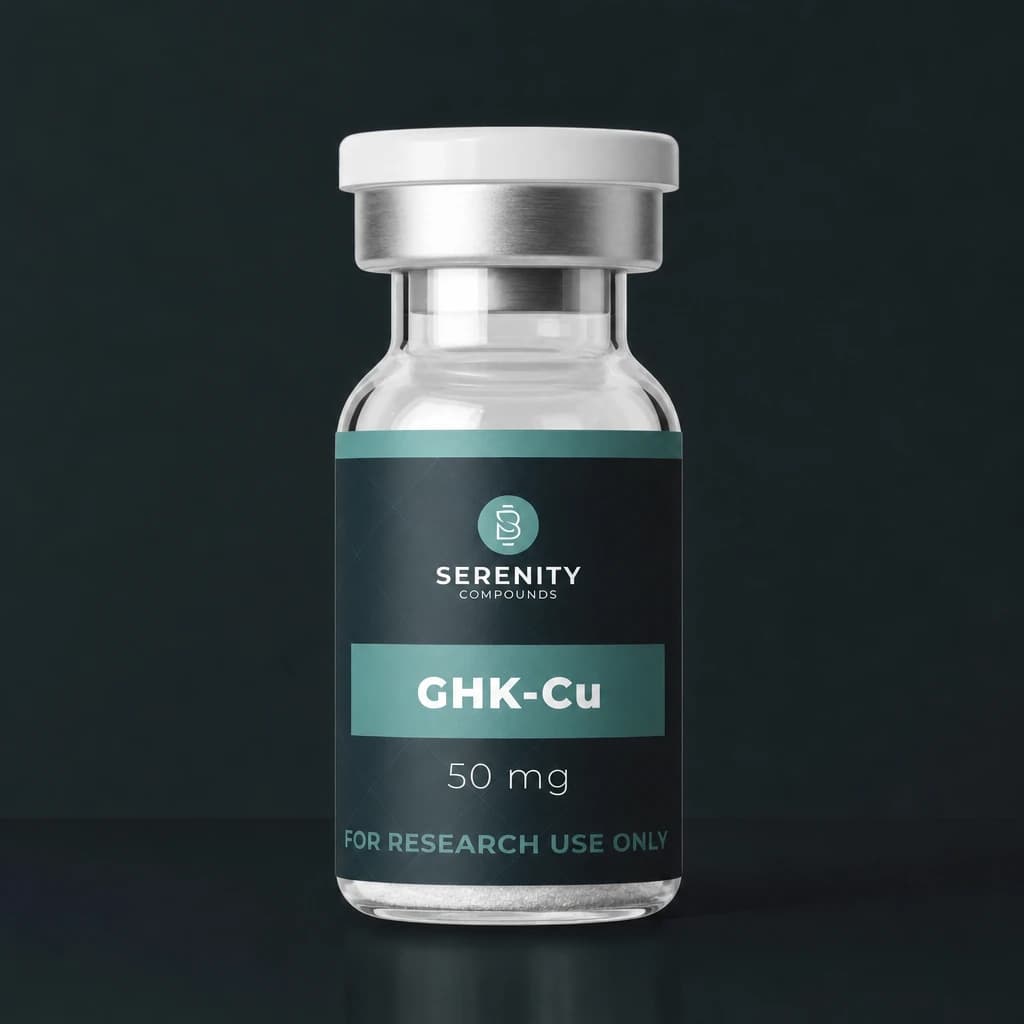
Copper peptides such as GHK-Cu combine a peptide ligand with copper. Research on these complexes asks how the associated metal and peptide behave in a particular biological or chemical setting. The answer depends on the surrounding solution as well as the starting material. A published cell response does not establish the performance of every cosmetic formulation containing a similarly named ingredient.
Why does copper coordination matter?
Binding changes the chemical environment around the metal. Other molecules in a buffer or culture medium may also interact with copper, so the prepared solution deserves attention alongside the dry reference. Reporting only the peptide's starting mass may leave the relevant metal balance unclear.
Serenity's copper peptide reference provides a catalog starting point for material selection. A suitable analytical specification should clarify what form was characterized and how the metal content relates to the peptide. Our identity guide covers the sequence and complex distinction in more detail.
What did fibroblast experiments measure?
Early collagen research investigated a response in cultured fibroblasts. A separate glycosaminoglycan study described a concentration dependent response in another defined experimental setting. These are useful observations about matrix related measurements, not direct demonstrations of visible skin improvement in consumers.
Concentration dependence can be more complicated than a steadily rising response. A result that changes direction or plateaus should not be summarized as greater amounts producing greater benefits. The full response curve matters when choosing follow up experiments or interpreting a single concentration cited in marketing.
Which controls help separate peptide and copper effects?
Consider a hypothetical study with the complex, the peptide without added copper and a copper source without the peptide. Those conditions can address different parts of the question, provided the amounts and solution background are appropriately matched. A vehicle condition remains necessary to understand the background response.
Free copper measurements and total copper measurements answer different analytical questions. An assay that measures all copper after sample treatment may not describe how much was available in the original culture medium. The analytical method needs to match the claim made about the biological exposure.
Could the reference interfere with the readout?
Color and redox chemistry can complicate optical measurements. A material blank without cells can help identify a direct signal from the preparation itself. If the reference changes an assay reagent, the apparent biological response may partly arise outside the cells. A second readout based on a different measurement principle can help investigate that possibility.
Why are cosmetic formulation claims a separate question?
Delivery through a finished formulation introduces factors that a cell culture experiment does not model. Ingredient concentration, vehicle composition and storage history can differ. The fact that a paper examined human cells also does not mean it tested topical performance in a human participant.
Claims about wrinkles or visible texture need relevant clinical measurements on the actual formulation or a scientifically justified equivalent. Before and after photographs without controlled conditions leave lighting and image processing unresolved. Our route and dosage discussion explains why topical observations cannot justify injection charts.
GHK Cu topical research versus a finished serum
Formulation performance involves more than whether an ingredient can produce a response in cultured cells. A finished serum has a vehicle, other ingredients and a package that can influence exposure and stability. To evaluate a topical claim, identify whether the cited study tested that complete formulation or only the isolated reference. An ingredient paper can explain a rationale without verifying the product placed beside the citation.
Barrier models answer a different question from direct cell exposure. Material added to a culture medium has already bypassed some of the obstacles relevant to topical delivery. A penetration experiment must define what crossed the barrier and how it was detected. Measuring copper alone, for example, would not necessarily establish that the original complex crossed intact. The analytical endpoint should match the delivery claim.
GHK Cu serum comparisons need matched conditions
Comparing two formulations requires control over more than their advertised ingredient percentages. Differences in vehicle composition can affect the baseline response or the measurement itself. A suitable comparison should identify the complete tested preparations and explain which variable the design aims to isolate. Otherwise, an observed difference may belong to the vehicle rather than the copper peptide ingredient.
Photographic outcomes also need a defined assessment method. Lighting, camera distance and image processing can change the apparent texture of a surface. A useful clinical formulation study would specify how images were standardized and how changes were assessed. Laboratory photographs of cells or materials answer other questions. They should not be presented as visual evidence that a cosmetic product changes human skin.
GHK Cu peptide benefits and extracellular matrix measurements
Collagen synthesis is not the same as the amount of organized collagen remaining in a tissue. Production and breakdown both contribute to the final state. An experiment measuring synthesis at one interval may leave turnover and structural organization unresolved. Describing the actual assay makes that limitation understandable without dismissing the result. The finding can guide a subsequent experiment that measures a different part of the process.
Glycosaminoglycan measurements add another matrix related endpoint. The cited fibroblast study reported a response that depended on concentration, which is a reason to inspect the full pattern instead of assuming a straight upward trend. That observation does not identify an ideal cosmetic percentage. A finished formulation introduces different exposure conditions and needs evidence appropriate to its own claim.
Copper peptide storage and reconstitution records
Buffers can change metal coordination, so the preparation matrix belongs in the method rather than in an informal note. Record the relevant composition and distinguish a nominal starting complex from any species established after preparation. If two experiments use different media, the same added mass does not guarantee an equivalent chemical environment. That difference can help explain why apparently similar studies produce different readouts.
Containers and transfer history deserve attention when recovery is important. A decrease in measured analyte could arise before the biological experiment begins. An appropriate recovery assessment can separate that possibility from a genuine absence of biological response. Storage claims should likewise specify whether the evidence concerns dry material, a stock solution or the final formulation. Those are different preparations with different supporting questions.
What does GHK Cu do?
Published research investigates the copper complex in defined chemical and biological settings, including the matrix related cell studies described here. The answer should remain attached to those settings. A measured change in collagen or another cellular output is not a universal prediction about a serum. To judge a product claim, look for evidence on the actual formulation and the outcome being advertised.
How to use GHK-Cu peptide?
Within laboratory work, the validated method determines the appropriate material specification and exposure conditions. A catalog description does not supply a universal preparation procedure. Before interpreting an assay, confirm whether the method requires the free ligand, its copper complex or a formulated reference. Human application and injection instructions cannot be derived from these research comparisons or from a concentration calculation alone.
What belongs in the report for a copper peptide experiment?
Document the ligand identity and the declared copper relationship separately from the final assay concentration. Record the solution background and explain whether analytical measurements describe the starting material or the prepared sample. That distinction makes a surprising result easier to investigate.
Interpret matrix related findings within the model that generated them. A carefully controlled laboratory experiment can contribute useful evidence about metal coordination or cellular response without making a claim that a research reference treats skin damage or is suitable for personal use.