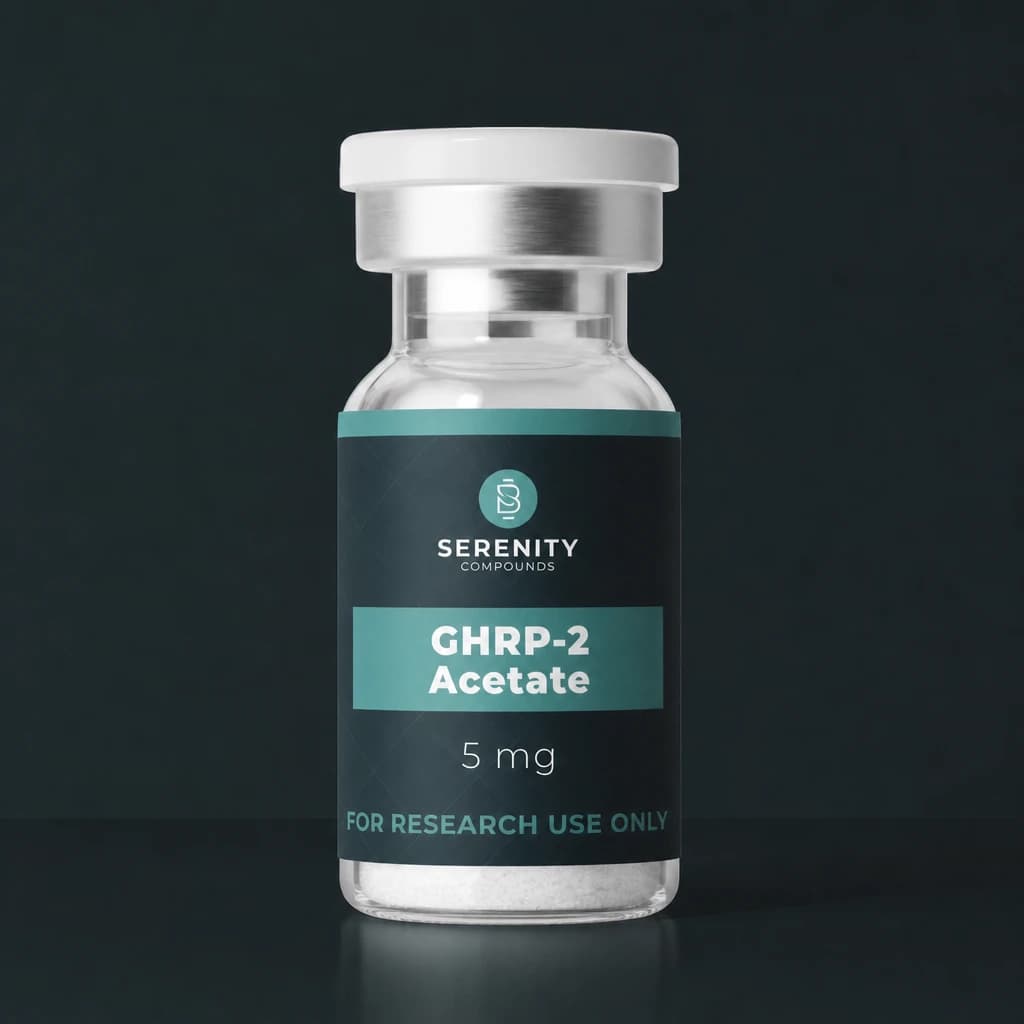
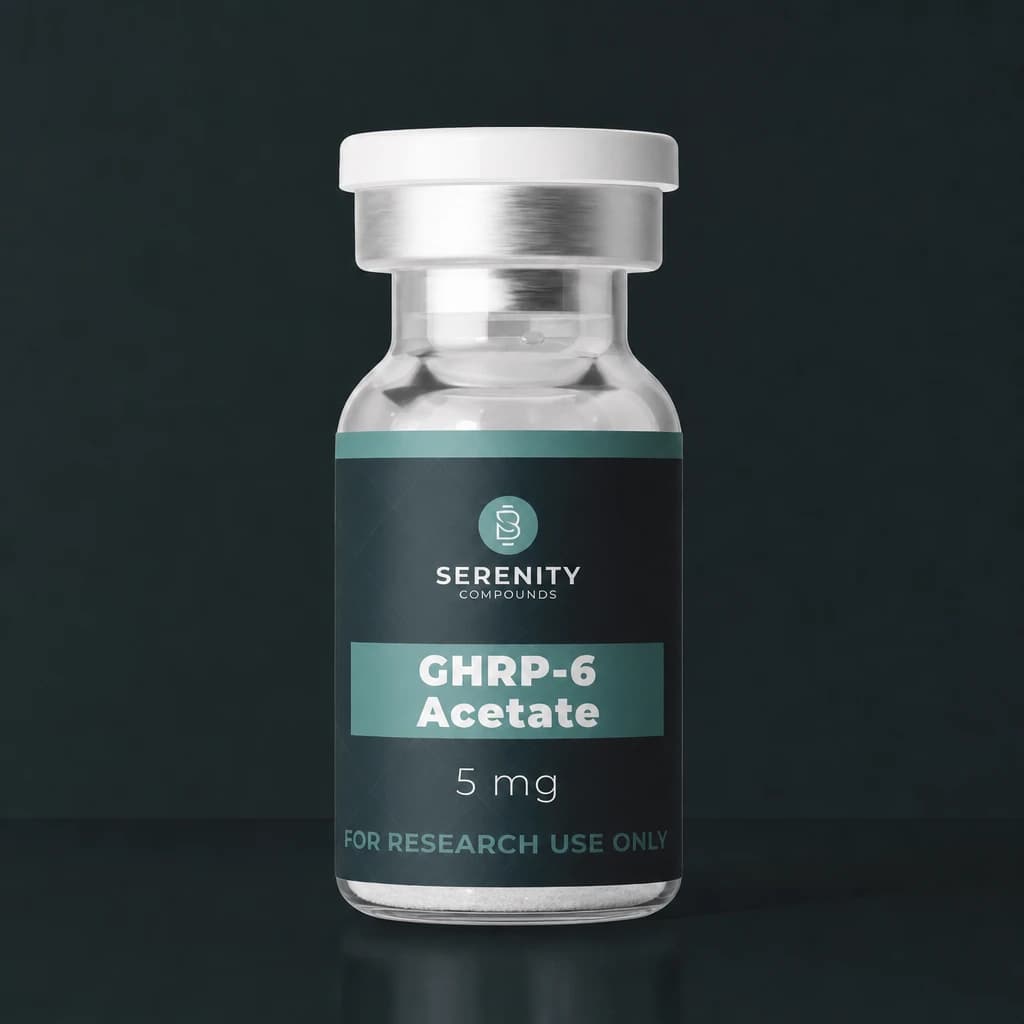
GHRP-2 vs GHRP-6 compares two distinct synthetic hexapeptides associated with the growth hormone secretagogue receptor pathway. Their shared category doesn't establish identical potency or the same effects across every endocrine endpoint. Popular comparisons often emphasize appetite or muscle gain, but those claims require measurements beyond a growth hormone peak. This guide explains how sequence and study design affect the comparison. It does not recommend either compound for human use or provide a dosing schedule.
GHRP-2 and GHRP-6: why six residues still define different identities
Sequence differences distinguish the first reference from the related six residue compound with the higher number. Amino acid substitutions and stereochemistry can affect molecular interactions. The numbering in the names isn't a scale of strength or an instruction about quantity. A laboratory needs the complete identity rather than assuming that two members of the same named family differ only in a minor commercial detail.
GHRP-6 should likewise be connected to its exact sequence and chemical form. An analog with an additional substitution is a separate reference, even if its name contains the same abbreviation. A publication involving a modified antagonist or another secretagogue cannot automatically provide the same evidence as a study of the unmodified compound being compared here.
Serenity's first hexapeptide listing and second hexapeptide listing identify the separate catalog materials. The acetate designation belongs in the procurement record rather than being silently dropped from chemical form accounting. A shared category and similar packaging do not establish identical composition or analytical behavior.
What has human endocrine research measured?
One study of secretagogue endocrine responses examined growth hormone alongside prolactin, ACTH and cortisol. Its comparison involved specified compounds and controls. It should not be described as a direct trial between the two materials in this article when that isn't the design. The source is relevant because it shows why a growth hormone measurement alone doesn't fully characterize endocrine response.
Separate research on the other hexapeptide investigated sleep and hormone release. Those endpoints provide a distinct study context. A sleep observation doesn't establish an appetite effect, and a hormone change doesn't automatically demonstrate muscle hypertrophy. Each result should retain the specific outcome and population rather than being converted into a general benefit score.
Additional work on age and sex related response illustrates why population context matters. Participants with different physiological characteristics may respond differently under the tested conditions. A study in one group cannot serve as an interchangeable control arm for another publication involving a different group. Cross study comparisons need explicit caution even when the hormone units match.
Why can a hormone peak mislead?
Growth hormone secretion varies over time. A peak captures one feature of a sampled response, while integrated exposure captures another. Sparse sampling can miss the highest concentration or misrepresent the shape of the response. A report needs its collection schedule before a reader can determine whether two peak values were measured in a meaningfully comparable way.
Baseline adjustment changes the question too. Absolute concentration and change from baseline aren't interchangeable quantities. If starting values differ, a similar absolute response can produce a different percentage change. A comparison should retain the underlying values and analysis method rather than choosing the percentage that makes one compound appear strongest.
Multiple hormone endpoints introduce additional interpretation. A condition could differ on one marker without differing on another. Reducing the result to a single selectivity claim may conceal that pattern. The relevant assay panel and observation period define what was assessed, and unmeasured effects remain unmeasured rather than proven absent.
GHRP 6 peptide and appetite claims: measure the actual outcome
Subjective hunger can be assessed with a defined instrument, while food intake is a separate behavioral measurement. The two may be related without changing in the same proportion. An endocrine paper that doesn't measure either cannot establish a reliable ranking for appetite effects. Anecdotes can raise questions, but they lack the controls and denominators needed to answer them consistently.
Meal timing and food availability can affect an intake observation. A study needs to specify the conditions under which behavior was measured. An unrestricted online account doesn't provide that control, especially if other substances or lifestyle changes occurred at the same time. Repeating similar testimonials does not turn them into independent controlled comparisons.
Body composition is further removed from a single hunger report. A change in intake over one interval doesn't establish a lasting change in muscle or fat. The bodybuilding evidence guide explains why hormone markers and physique outcomes must remain separate. This article deliberately doesn't turn appetite related search interest into advice for increasing food intake with experimental material.
A hypothetical assay comparison
Imagine a laboratory testing the two references in a system with a defined secretagogue receptor readout. Equal nominal mass concentrations would not necessarily provide equal molecule counts because the molecular masses differ. Molar accounting can make the comparison clearer, provided the chemical form and content assumptions are correct. This fictional example concerns measurement design, not a proposed experimental concentration or human exposure.
Receptor expression can influence apparent potency. If one experiment uses a different cell system from another, the response curves may differ for reasons beyond the compound itself. A within system comparison avoids some of that ambiguity but still needs suitable controls and validation. The model's limitations should remain part of the conclusion rather than disappearing once a numerical ranking is available.
Maximum response and potency are distinct features of a curve. A material can produce an effect at a lower concentration without producing a larger maximum effect. A single test point may not establish either property reliably. The phrase stronger therefore needs a precise definition before the experiment can be said to answer it.
How are these different from a GHRH fragment?
Sermorelin involves the GHRH receptor pathway rather than the secretagogue pathway discussed here. A shared downstream hormone output doesn't make those mechanisms identical. The receptor comparison guide develops that distinction using another secretagogue. Its conclusions about study design are relevant, but compound specific findings shouldn't be transferred indiscriminately between family members.
Combining receptor pathways creates a separate research question. A larger response from a mixture doesn't prove synergy without a defined additive expectation and appropriate constituent controls. The composition and exposure to each component need to be documented. A catalog blend name cannot supply those design details or establish a clinically validated combination.
Duration claims also need the exact material. A result for a chemically modified analog should not be assigned to every peptide associated with growth hormone release. Our GHRH identity article explains why sequence and formulation remain essential when connecting a study to a reference. Familiar abbreviations are not evidence of equivalent persistence or exposure.
Questions about endocrine and appetite research
What is GHRP 6?
It is a six residue growth hormone releasing peptide reference with its own sequence and experimental literature. Sharing chain length with another secretagogue does not establish identical behavior. The lot specification should resolve the actual material, while a comparison should preserve the receptor system and endocrine endpoint used to assess it.
Does GHRP 2 make you hungry?
Hunger is an outcome requiring an appetite assessment, not an inference from a hormone peak. A study measuring endocrine responses cannot alone establish the frequency or magnitude of a subjective appetite change. Identify whether intake or hunger was directly measured and under which conditions before treating the claim as a supported result.
What should a responsible comparison conclude?
Safety requires evidence distinct from the desired endocrine response. A limited study may detect some events while leaving uncommon or delayed effects uncertain. An analytical purity result doesn't establish clinical safety, and research catalog material is not an approved human protocol. No conversion from study exposure to a self administration amount is offered here.
Documentation should preserve the exact reference and lot, then distinguish the receptor assay from the endocrine or behavioral study. Record the population and observation interval beside each result. Empty evidence categories are useful because they show where a claim hasn't been established. They should not be filled with anecdotes simply to produce a complete looking comparison.
Ultimately, the two hexapeptides can be compared on a defined measurement under suitable conditions. The available sources do not justify a universal winner for appetite, muscle growth or safety. A precise comparison states what the experiment measured and leaves broader claims open when the necessary evidence is missing.