A Peptide Sciences review is useful only when its conclusions are supported by identifiable evidence. Brand recognition, affiliate rankings and forum popularity don't establish the contents of a vial. The same standard applies to Apex Peptides, Serenity Compounds and any other supplier being considered for laboratory procurement.
Is this a review of either company's current products?
This article is a framework for evaluating supplier reviews. It does not report independent testing of either named company or claim to have verified their current inventory. Serenity is itself a research material supplier, so that commercial relationship should remain visible. No competitor is endorsed or condemned on the basis of an unexamined online claim.
What would make a supplier claim checkable?
Start with the exact claim. A statement that a package arrived on a certain date concerns fulfillment. A statement about peptide identity requires appropriate analytical evidence. A claim about every future lot requires substantially more than a single certificate. These categories should not be blended into one unexplained star rating.
Lot linkage is a practical dividing line. A report for one lot may be relevant to that shipment while saying little about a later order. The product label, report identifier and purchase record should agree. Our COA guide explains how those records answer different questions.
Does a 99% purity claim prove identity?
Purity describes a measurement made by a particular method. Identity concerns whether the intended material is present. A chromatographic trace can look simple without establishing every structural feature. The report needs to state what was measured and how the conclusion was reached. A number copied into a review without the method loses much of its meaning.
How can two suppliers be compared fairly?
Use the same requested material and acceptance questions for both. Comparing a fully documented single compound with an unspecified blend does not isolate supplier quality. Available evidence may also differ because one reviewer purchased recently while another refers to an older lot. Preserve those dates instead of presenting all observations as current.
Separate missing information from a failed test. If a report doesn't state a method, the correct conclusion is that the method is not documented in the material reviewed. It is not proof that the supplier never performed testing. Conversely, familiarity with a brand doesn't justify assuming that an undocumented requirement has been satisfied.
A worked procurement comparison
Imagine two hypothetical offers for the same reference. Offer A costs less and includes a purity percentage, but the document does not identify the available lot. Offer B costs more and supplies a matching lot record with identity information. The first unanswered question is whether Offer A can provide the missing linkage. Price alone cannot resolve it.
Suppose that linkage is later supplied. The comparison can then move to method suitability and the total procurement cost. A documented answer changes the assessment. A fixed score that ignores new evidence would be less useful than a short decision record explaining which requirement was met and which remained unresolved.
What service evidence is relevant?
Written responses to documentation questions can establish what was requested and when an answer arrived. Package photographs can record the condition of a particular shipment. Neither observation proves peptide identity, but both can be relevant to procurement. Our chain of custody article shows how receipt evidence connects to later laboratory records.
Claims about current competitor conduct should link to dated source material. This framework makes no such unverified allegation. A review that reports an unresolved experience should distinguish firsthand records from comments repeated by someone else.
Finding the best place to buy peptides online for a laboratory
Procurement criteria should be written before the supplier names are compared. A laboratory may require a defined chemical form, a minimum amount of material and particular analytical information. Another method may need a different form or a different measurement. Without those acceptance criteria, a best supplier ranking can reward the most persuasive presentation rather than the product that fits the experiment. The useful question is whether the evidence answers the laboratory's requirements.
Price comparisons also need a consistent denominator. Cost per vial can conceal different quantities, and cost per labeled milligram can conceal different composition claims. A blend cannot be compared with a single compound merely because the total masses look similar. Include delivery costs and any additional testing the laboratory would need to commission. An inexpensive material that requires unresolved identity work may have a different total procurement cost from the number shown beside its purchase button.
What should a request for documentation ask?
Ask which lot is represented by the report and whether that lot is the one currently available. Request the analytical method relevant to the acceptance requirement, not simply a second copy of a purity badge. If net content is required for the experiment, distinguish that question from chromatographic peak area. A precise request makes an incomplete response easier to identify without accusing the supplier of failing a test that was never discussed.
Responses should remain attached to their dates. An answer obtained before a new lot became available may not resolve questions about the replacement material. Preserve the original document and the clarification rather than silently editing a procurement worksheet to make the two agree. A changed report number, quantity or chemical form may require a new assessment even when the commercial product name has stayed the same.
Why a review of peptide science needs method details
Chromatography can separate sample components under the stated conditions, but different methods can produce different views of the same preparation. The report should identify enough of the analytical approach to explain the result being claimed. A single prominent peak is not a universal measurement of every possible impurity. Likewise, a detector may respond differently to different components, so an area percentage should not automatically be treated as a mass fraction.
Mass spectrometry can add evidence about molecular mass without resolving every structural distinction. A result consistent with an expected mass may still leave questions about sequence or other features, depending on the method. These are reasons to match evidence to the acceptance question, not reasons to dismiss every report that uses a particular technique. Independent methods can be complementary when they investigate genuinely different sources of uncertainty.
Delivery evidence and storage claims
Receipt records establish what happened to a shipment rather than what happens inside a test system. Document the label and packaging condition before separating materials from their transport record. If the laboratory requires a controlled transport condition, ask what evidence supports that condition for the actual shipment. A statement that an item ships quickly is not a measurement of its temperature history or a stability assessment after a delay.
Storage guidance should identify the material state it describes. An unopened dry reference and a prepared working solution may not share the same evidence base. A reviewer who repeats a general storage period without identifying the solvent or container leaves out variables needed to interpret the claim. Laboratories should keep the relevant method and supplier documentation together so an uncertainty about handling is not mistaken for a disagreement about the compound itself.
Supplier questions that need specific evidence
Is Peptide Sciences legit?
Legitimacy is not one analytical result. A business identity check concerns who operates the store, while a lot report concerns a submitted sample. Fulfillment records address another question again. This article does not combine those categories into a verdict about a competitor. A defensible assessment identifies the particular requirement, the dated evidence reviewed and any gap that remains for the proposed purchase.
Where to buy peptides online for research?
Choose a supplier whose available material and documentation satisfy the laboratory's acceptance requirements. That decision should include the exact compound specification and the permitted research scope, rather than a popularity ranking alone. If two offers meet those requirements, commercial factors can then be compared on the same basis. An unresolved question should stay visible in the record instead of being replaced with a favorable assumption about a familiar brand.
Applying the same standard to Serenity
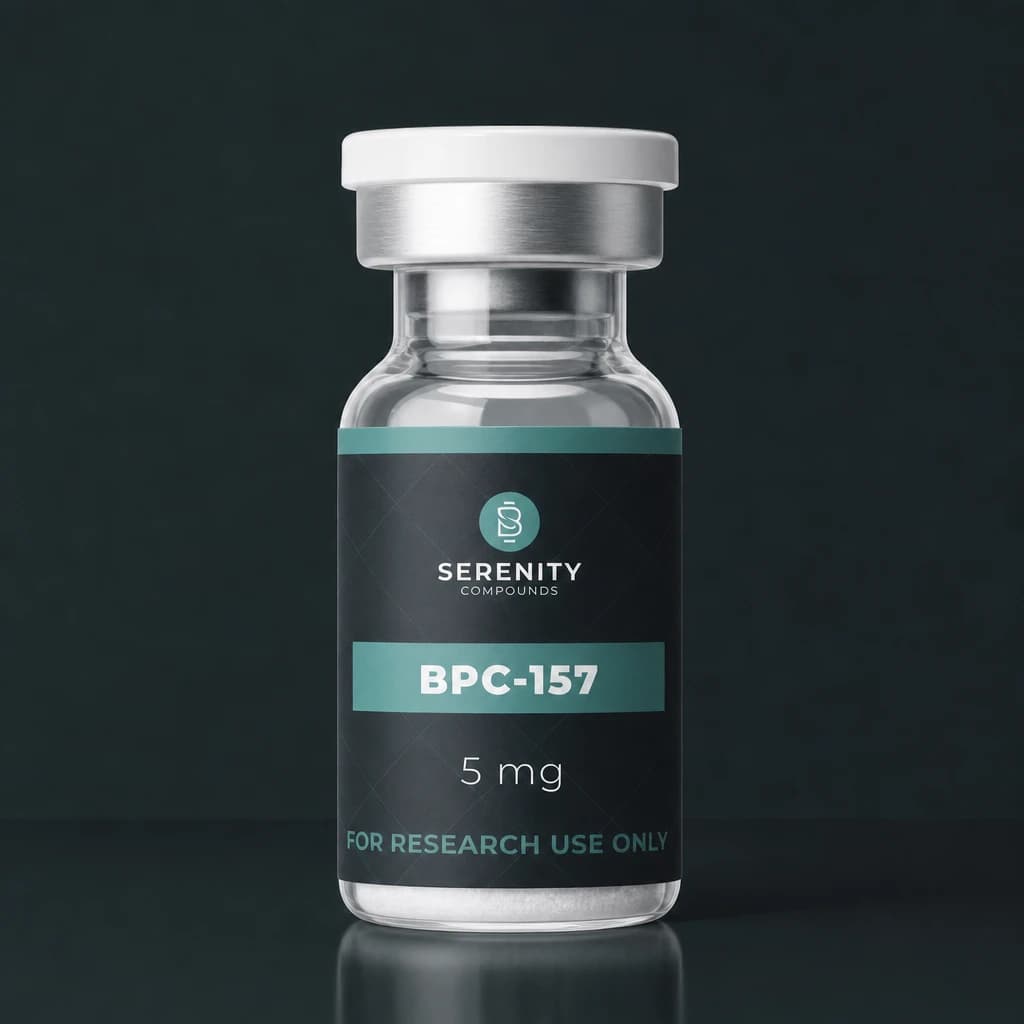
For a concrete example, a laboratory considering our BPC-157 reference should check whether the selected quantity and lot documentation match its method. A supplier's own explanation is a starting point for those checks, not independent proof of performance. Keep the final decision tied to the evidence available for the actual material being ordered.